
Anastasia Aldelina Lijadi, Executive Assistant to the Deputy Director General and Gender Equality and DEI Officer, highlights the IIASA Interaction Festival 2026 Open Mic Session, where research, creativity, and community came together.
The IIASA Interaction Festival is a one-and-a-half-day event that provides a dynamic platform for the IIASA community to share research, exchange ideas, and showcase creative contributions. Day two of the festival, held in the exquisite Theatersaal of the Laxenburg Conference Center, was enhanced by its setting and created a welcoming space where presenters could connect meaningfully with the audience.
Organized by committee members representing each research program and department, this year’s festival included a vibrant Open Mic session featuring twelve performances spanning movement, music, lived experience, and research updates. It brought together voices from across the IIASA community from Young Scientists Summer Program (YSSP) participants to Distinguished Emeritus Research Scholars, creating a rich tapestry of perspectives. In this shared space, science met art, and ideas were expressed not only through data and dialogue, but also through creativity and human connection.
 © Jelena Zrno | IIASA
A stage for creativity and connection
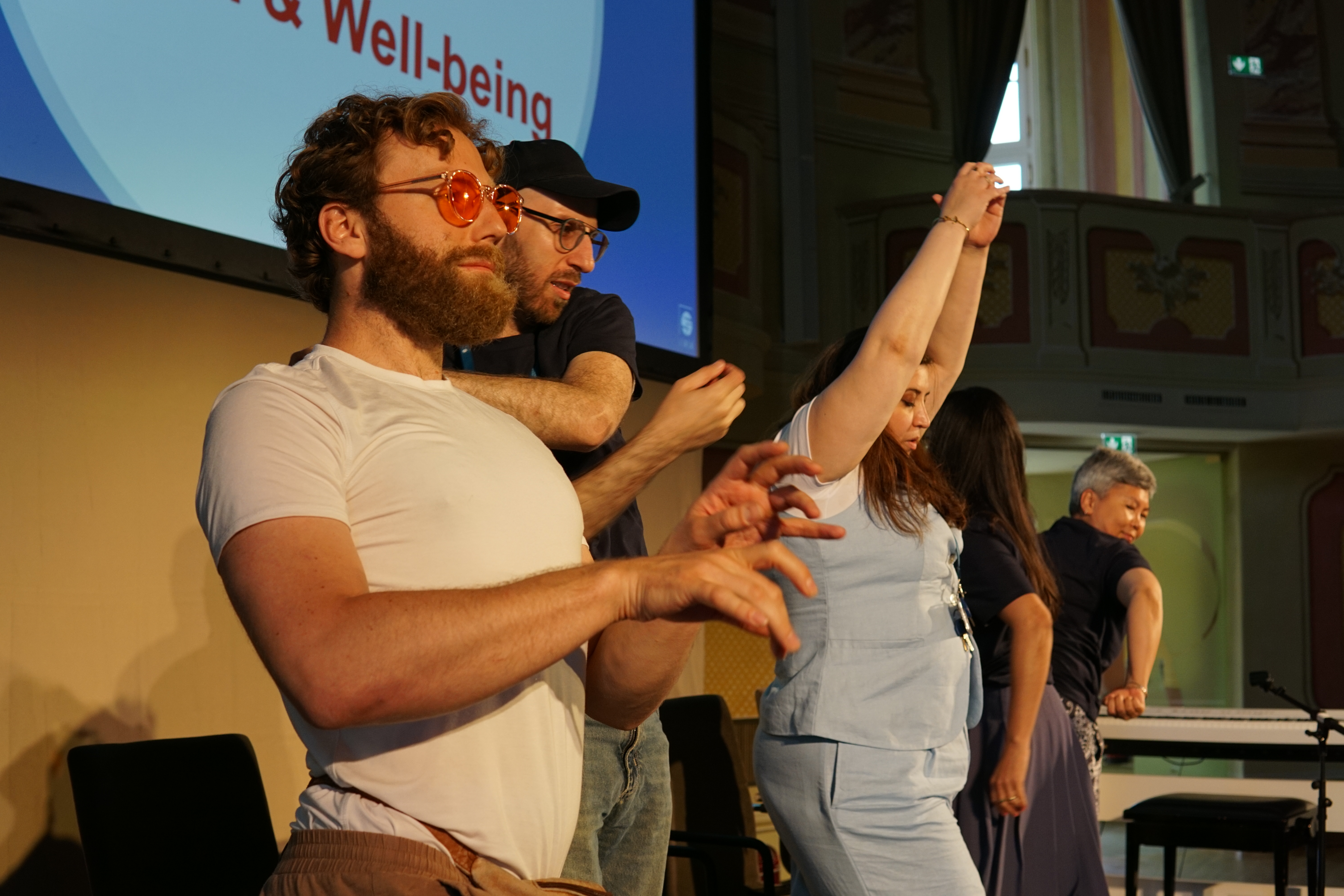
The session opened with an engaging theatre performance by Amer Batshone, Joelva Brandstetter, Amani Elyafi, Anastasia Lijadi, and Mikhail Smilovic. Through expressive movement and thoughtful choreography, the group explored the tensions of work-life balance with both humor and depth. “Sometimes the body speaks louder than the calendar,” Anastasia Lijadi reflected, and further noted, “Balance isn’t something we find – it’s something we keep renegotiating.”
The performance resonated strongly with the audience, offering a relatable daily work life of IIASA employees and a reflective lens on maintaining wellbeing in demanding professional environments.
Advancing knowledge through research
The afternoon continued with a series of research presentations that highlighted both the depth of IIASA’s work and creative approaches to engaging audiences beyond traditional formats.
Karl Scheifinger introduced the Scenario Compass, a global initiative designed to develop an open, continuously updated database of emissions scenarios to support climate analysis and policy. Led by IIASA in collaboration with the Integrated Assessment Modeling Consortium (IAMC) and partners including the Bezos Earth Fund, the project addresses a key challenge in climate research: making scenario data more transparent, accessible, and relevant for real-world decision-making. Benefiting from contributions by major international modeling teams and maintaining a living database, the Scenario Compass allows users to explore near-term transitions with greater flexibility and timeliness.
 © Jelena Zrno | IIASA
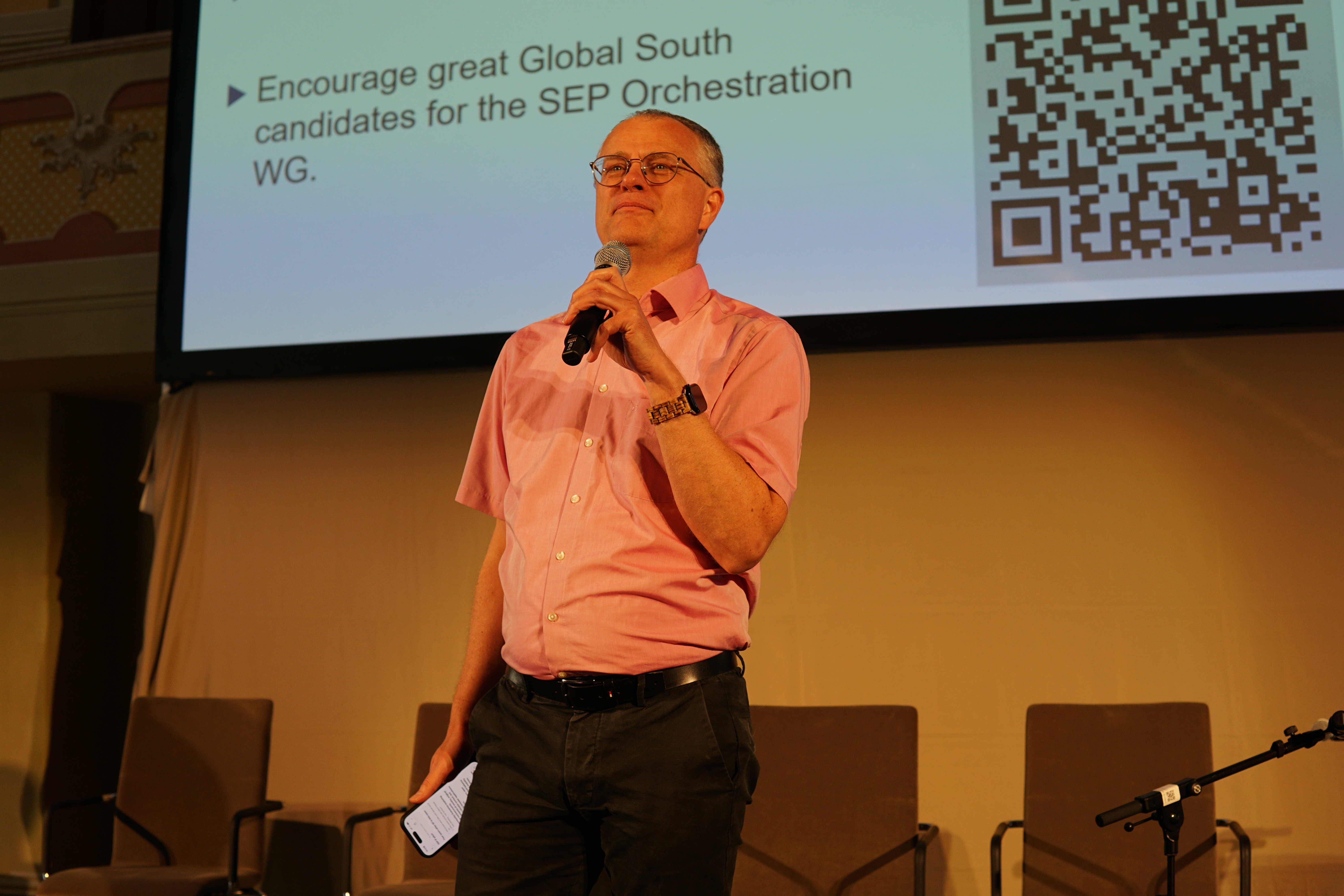
Interactivity was central to the session. Rather than remaining passive listeners, participants were invited to engage directly with the research: scanning QR codes to explore datasets on their own devices and experimenting with the “Ask Scenario Data Anything” platform introduced by Pino Mussak. This hands-on approach lowered barriers to complex information, encouraging curiosity and dialogue while demonstrating how digital tools can make advanced modeling outputs more approachable.
Bas van Ruijven’s update on the Scenario Evolution Process further emphasized the need for global scenarios to evolve alongside rapidly changing societal and environmental conditions. Launched in February 2026, this multi-year, community-driven initiative aims to update the Shared Socioeconomic Pathways (SSPs). Coordinated by ICONICS and supported by a wide network of international collaborators, the process seeks to better integrate climate, biodiversity, development, and equity considerations.
 © Jelena Zrno | IIASA
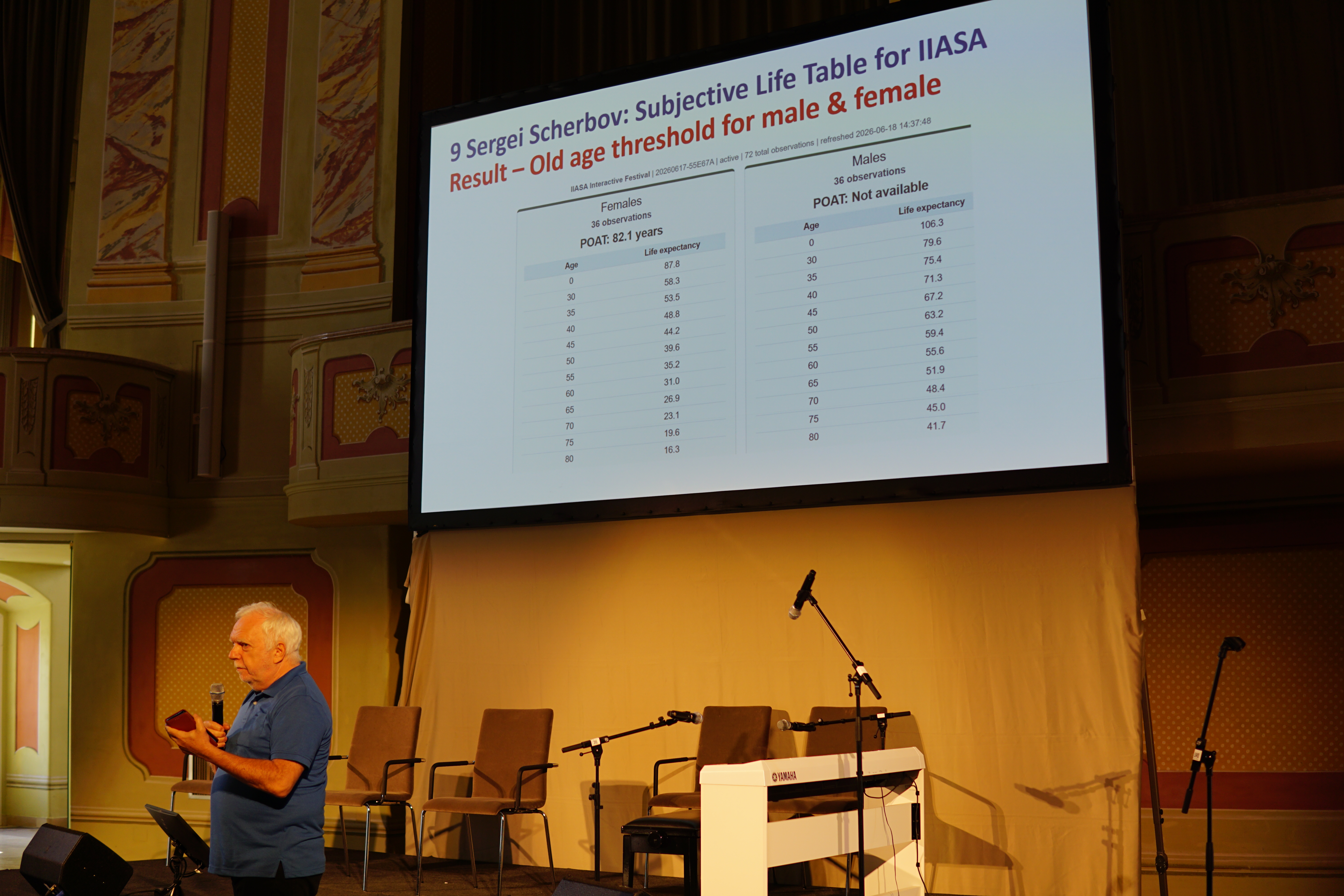
A particularly memorable moment was the introduction of the Subjective Life Table by IIASA Distinguished Emeritus Research Scholar and 2024 Lifetime Achievement Awardee Sergei Scherbov. Inviting anonymous audience input on expected longevity, he transformed the room into a live data exercise, generating a real-time “IIASA life table.” The activity made demographic concepts immediate and personal, illustrating how statistical models are ultimately grounded in individual perceptions and lived realities. Sergei Scherbov stated that it was “data that reflects not just populations, but our hopes, uncertainties, and lived experiences.”
Across these segments, research was not only presented but experienced, inviting participants to question, contribute, and see themselves as part of the knowledge-making process.
 © Jelena Zrno | IIASA
Musical performance
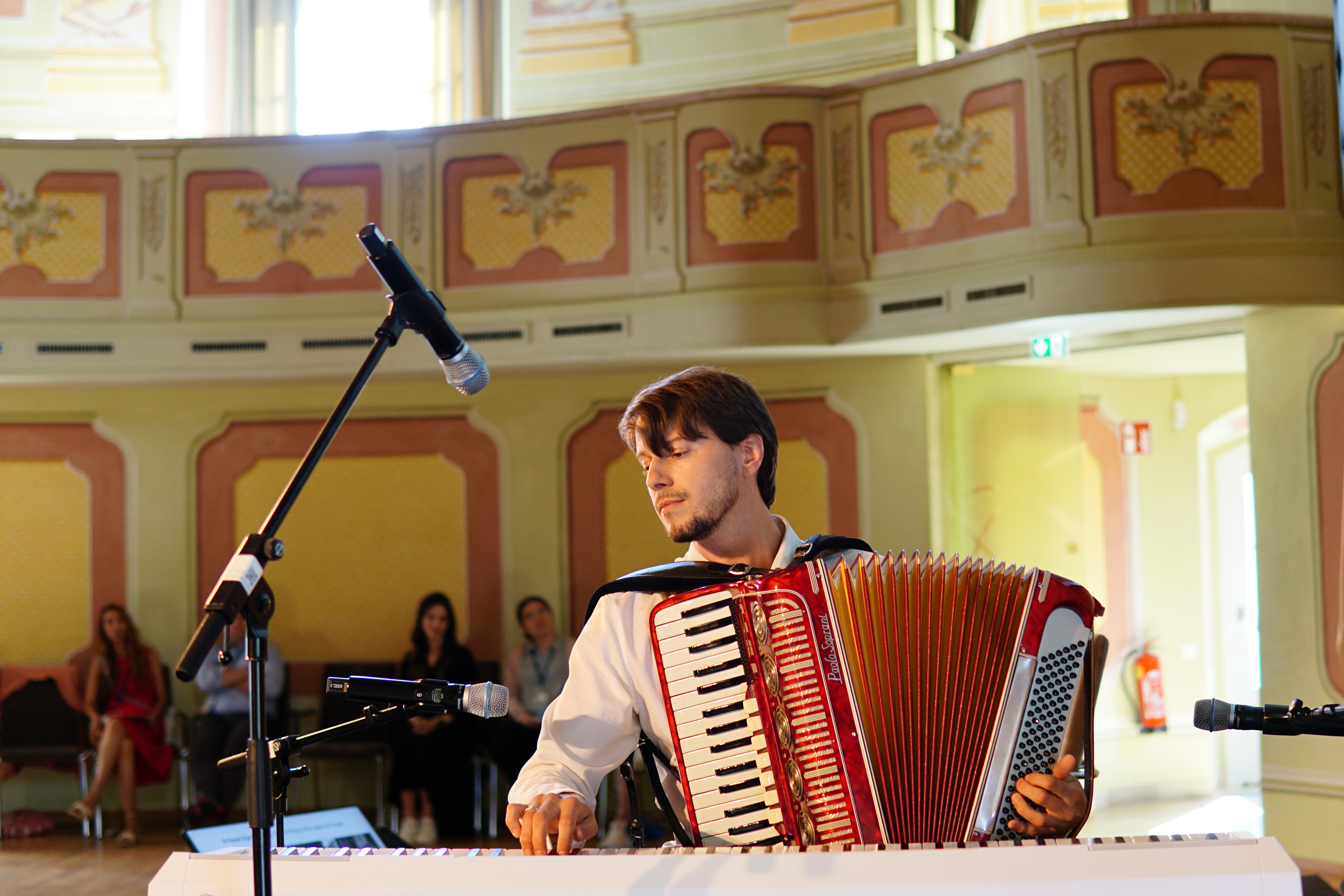
A musical interlude shifted the atmosphere as Pavel Kiparisov performed his original composition, *La Valse d’Asia (The Valse of Asya)*, on piano and accordion. Layered and expressive, the piece unfolded like a journey through shifting emotional and cultural landscapes. The interplay between instruments created a rich narrative texture, blending personal expression with broader influences. The performance underscored how music, like science, can connect perspectives and transcend boundaries without relying on words.
 © Mary Raphaela Synolaki
Personal journeys and perspectives
Personal narratives added depth to the session, foregrounding the human experiences behind research and collaboration.
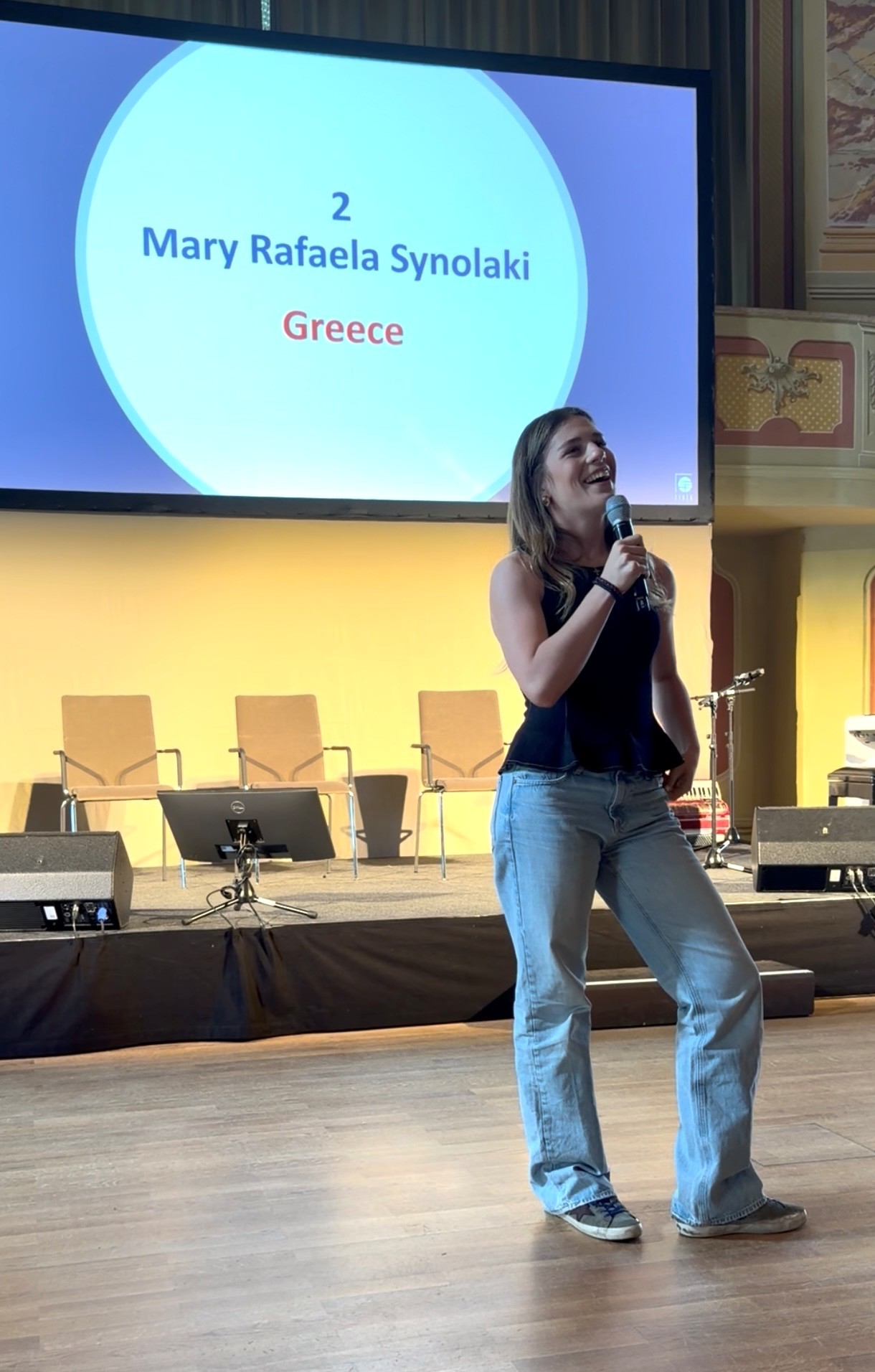
An engaging high school project by 17-year-old Mary Raphaela Synolaki, daughter of an IIASA Council member from Greece, offered a thoughtful perspective on unaccompanied refugee wellbeing and integration in Greek schools. Drawing on both personal insight as a volunteer in Athens College’s School Project and broader societal observations, she highlighted the critical role of education, inclusion, and empathy in addressing complex challenges. Her contribution brought a fresh and sincere voice to the session, underscoring how younger generations engage with and reflect on issues of belonging and integration.
Anqi Zhu, a YSSP 2026 participant and second-year PhD student at the Department of Geography at LMU Munich, Germany, shared a journey shaped by scientific curiosity and cultural exchange. With research interests in community resilience and flood governance, Zhu wove together insights from scholarly work with personal reflections on navigating diverse ways of thinking, living, and responding to environmental challenges across different contexts.
An early-career researcher and YSSP alumna, Gemma Gerber, reflected on the importance of access, mentoring, and mobility in shaping scientific pathways, while also raising important questions about inclusivity within the IIASA community. Her reflections highlighted key structural challenges, including the use of highly technical terminology that can create barriers for students, gaps in two-way knowledge exchange, and uneven access to mentorship. She also underscored the need for clearer funding pathways, stronger engagement with underutilized expertise such as within the IIASA Sub-Saharan Africa Regional Member organization (SSARMO), and more coordinated support through standardized mentorship practices and improved collaboration with Member Organizations.
Patil Pratik offered his opinion on expanding further to global systems, exploring intersections between security, geopolitics, and environmental limits, and emphasizing the importance of anticipating emerging dynamics in an increasingly complex world.
 © Jelena Zrno | IIASA
Humor and creative expression
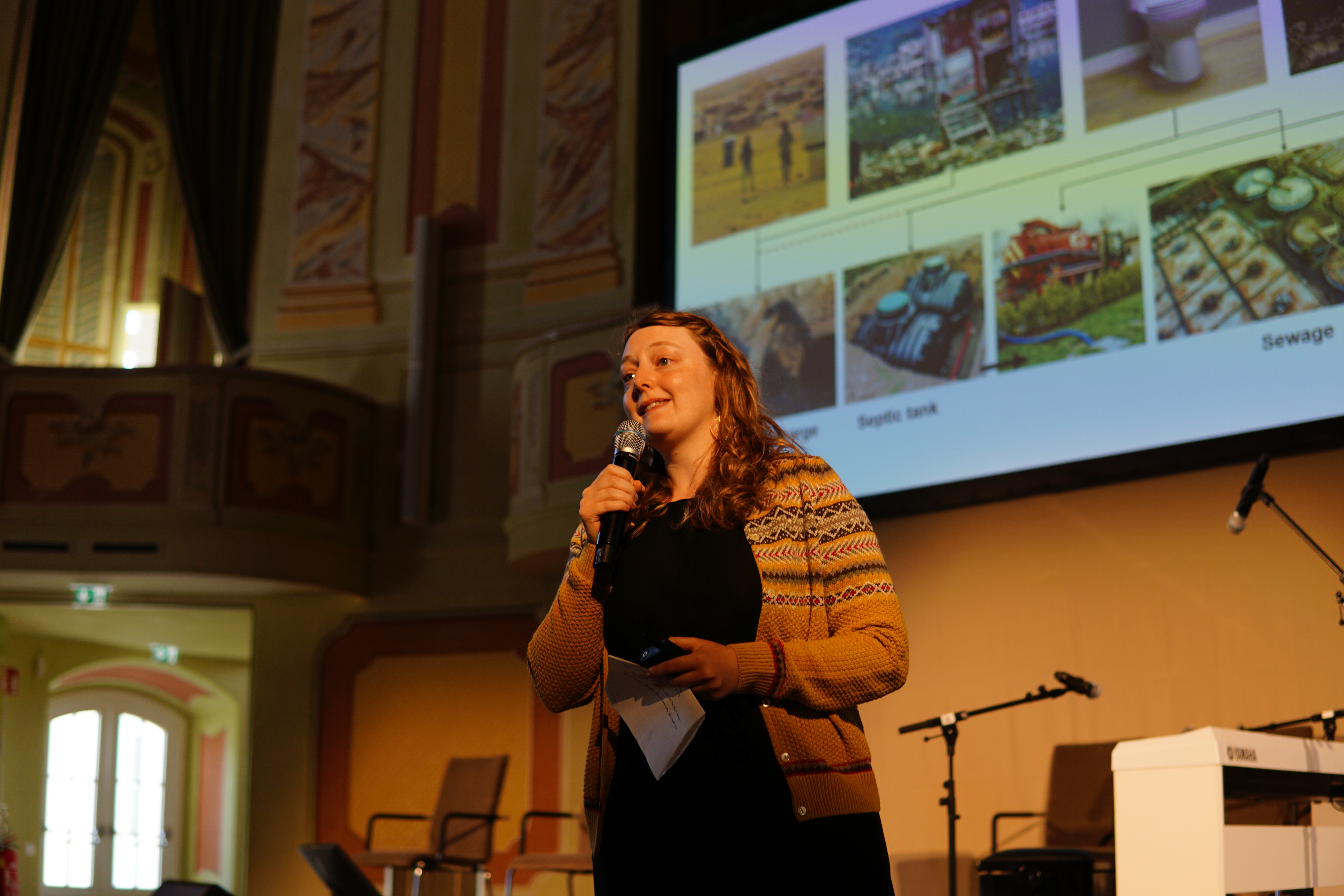
Humor entered the stage with the memorable presentation *We Need to Talk About Toilet*, culminating in the poetic recital *An Ode to the Humble Loo* by Rebekah Hinton. Blending with insight, the performance brought attention to sanitation – an often overlooked yet essential aspect of daily life and human dignity. As the poem reminded the audience, “The loo is where dignity, design, and daily life quietly meet.”
The segment drew laughter while also prompting reflection, demonstrating how unconventional topics can reveal meaningful societal insights.
Engaging the community
The session concluded with an interactive introduction to the IIASA Discussion Forum by Michael Freiberger and Vered Blass, encouraging participants to share ideas, initiate conversations, and sustain the collaborative momentum beyond the festival.
A celebration of IIASA’s spirit
The open mic session ultimately reflected the vibrancy and diversity of the IIASA community. By weaving together scientific rigor and creative expression, it created a space for genuine connection, dialogue, and inspiration.
“This is where IIASA truly comes alive, not just in what we do, but in how we connect”, concluded Lijadi.
Note: This article gives the view of the authors, and not the position of the IIASA Insights blog, nor of the International Institute for Applied Systems Analysis.