
From poverty and resource extraction to climate policy and economic modeling, the Economic Frontiers Program explored some of the most pressing questions at the intersection of economy, society, and sustainability. Research conducted in 2025 challenged conventional assumptions and generated new perspectives on how progress can be measured and achieved.
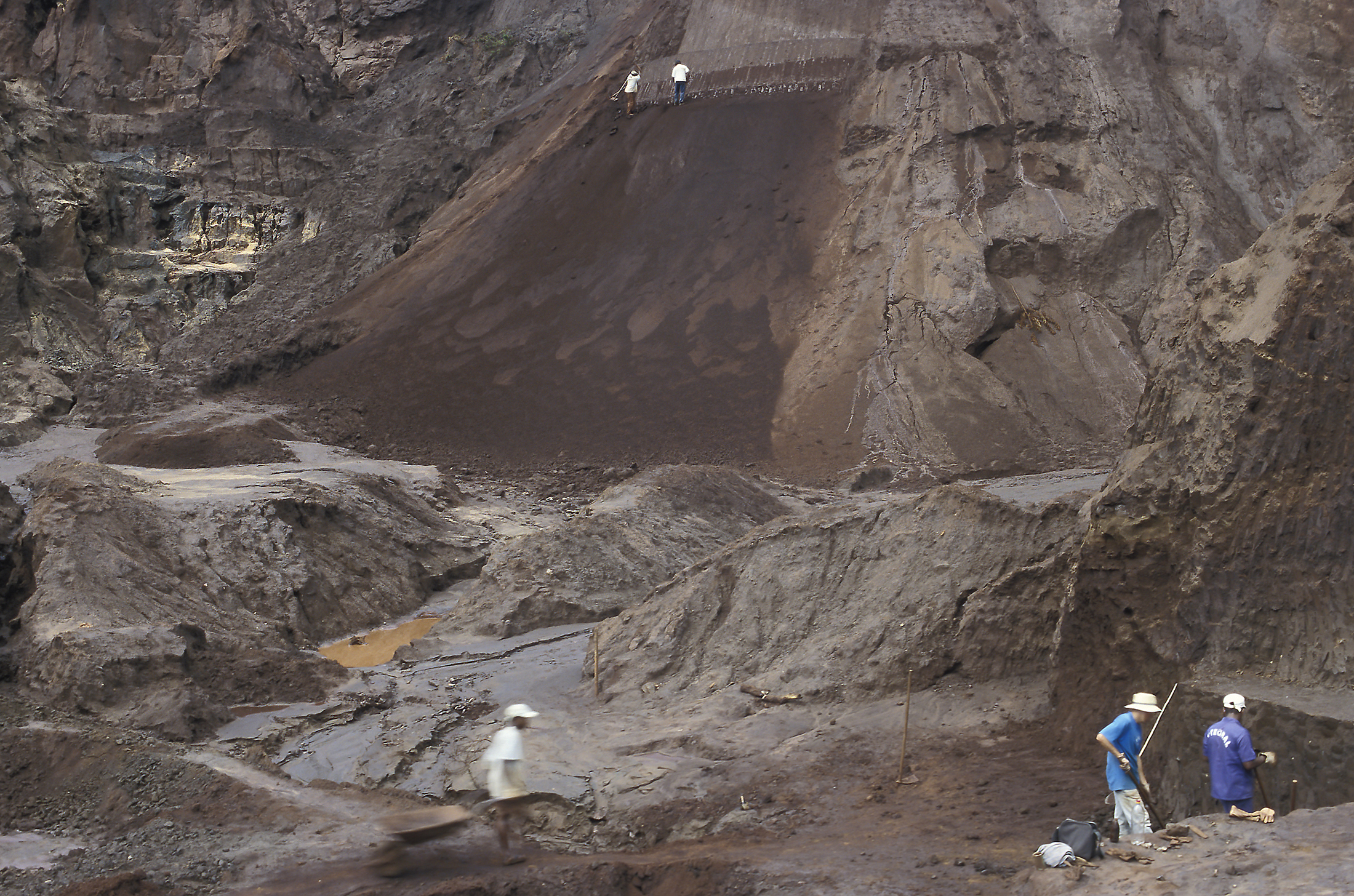
Mining in Brazil: Economic gains, environmental costs
Mining is often promoted as a pathway to economic development. However, research shows that its economic benefits may be short-lived, while environmental costs, especially from informal mining, can be severe.
Researchers from IIASA, the Vienna University of Economics and Business (WU), and the University of São Paulo combined satellite imagery with official economic statistics to analyze mining’s impacts across more than 5,000 municipalities. The study compared large-scale industrial mining with informal small-scale mining, known as garimpo, tracking both environmental and economic outcomes over time and across neighboring regions.
“Mining is frequently promoted by political and business leaders as a pathway to prosperity, but we found that the reality on the ground is much more complex and often disappointing,” explains lead author Sebastian Luckeneder from WU. “Our results show that in many cases, the economic boost is short-lived and comes at the cost of lasting environmental damage.”
Results show that garimpo mining is closely associated with deforestation, particularly in the Amazon. Industrial mining, while less directly linked to forest loss, also failed to generate stable longterm economic growth in many regions.
“Our findings challenge the idea that mining is a reliable engine for local development,” notes IIASA researcher Tamás Krisztin. The authors emphasize that stronger regulation and oversight are essential to reduce environmental harm and ensure that mining activities contribute meaningfully to sustainable development. The study was partly conducted during the 2021 IIASA Young Scientists Summer Program (YSSP) as part of Luckeneder’s YSSP project.
Further information: pure.iiasa.ac.at/20760

Rethinking poverty
Despite decades of global efforts to reduce poverty, many people still lack reliable access to the basic services and infrastructure needed for a decent life. Research led by IIASA offers a broader way to understand poverty: one that looks beyond income to whether people can meet fundamental physical and social needs.
Using household data from 75 low- and middle-income countries, the study applies the Decent Living Standards (DLS) framework developed at IIASA. The analysis shows that 94.9% of households lack at least one of ten essential living standards, while nearly two-thirds fall short in at least one-third of them, significantly higher than estimates based on conventional poverty measures.
“Income doesn’t tell us enough,” explains IIASA researcher, Roman Hoffmann, the study’s lead author. “It’s about whether people can meet their basic needs. When we look at access to essential services, resources, and infrastructure, deep and persistent inequalities become apparent.”
The DLS framework evaluates ten dimensions of wellbeing, including housing, nutrition, sanitation, education, mobility, and communication. Across the dataset, the largest gaps were found in modern cooking facilities, healthcare access, housing quality, and sanitation.
Regional disparities remain stark. Sub‑Saharan Africa recorded the lowest attainment of decent living standards, and the divide between rural and urban areas has remained largely unchanged over the past three decades.
By developing a subnational dataset on multiple deprivations, the researchers aim to support more targeted policies and help governments design strategies that address poverty in all its dimensions.
Further information: pure.iiasa.ac.at/20666
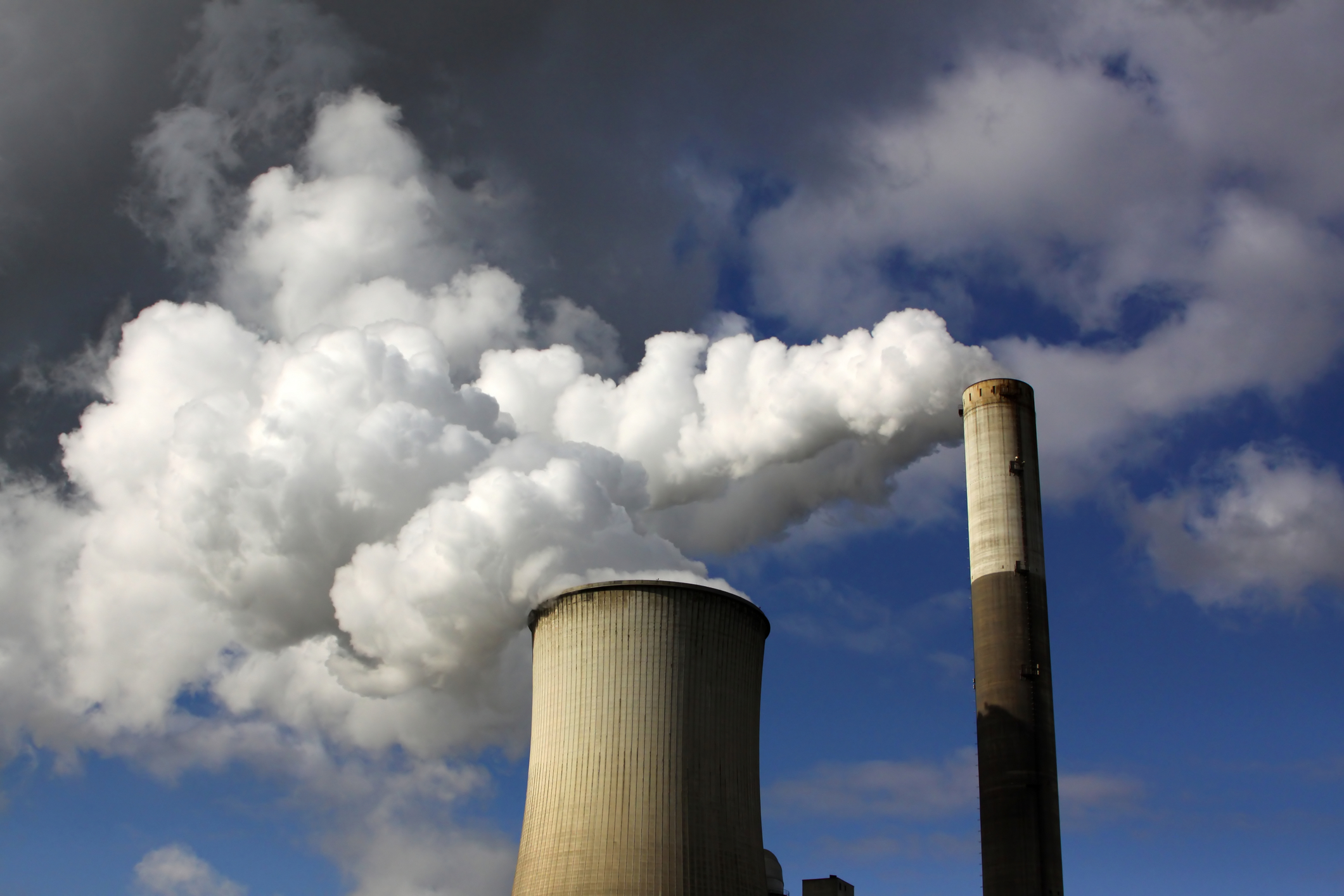
Designing fair and effective carbon taxes
Who should pay for carbon emissions and how can climate policies treat different generations fairly? Research shows that while taxing firms can reduce emissions effectively, additional measures may be needed to balance impacts across society.
CO₂ emissions are a classic economic externality: companies generate them during production, but their impacts are felt by society as a whole. At the same time, individuals often perceive their own contribution as too small to influence the overall problem. These dynamics make designing effective and fair climate policies particularly challenging.
IIASA researchers collaborated on a study addressing this issue by developing an economic model that links firms producing goods – and emitting CO₂ – with an age-structured population. Unlike many previous models, the approach accounts for life-cycle effects and differences between generations, recognizing that climate impacts and policy costs are experienced differently over time and across generations.
The researchers compared outcomes in a decentralized market with a socially optimal scenario and examined how different tax policies perform. Their results show that taxing firms is sufficient to reach the socially optimal level of emissions. However, ensuring a fair distribution of consumption across age groups is more complex.
“Our results show that firm-level carbon taxes are sufficient to achieve the socially optimal level of emissions,” explains coauthor and IIASA researcher, Stefan Wrzaczek. “But along the transition to that equilibrium, additional age-specific taxes may be needed to distribute the economic burden fairly across generations.”
The findings highlight the importance of considering demographic structure and intergenerational fairness when designing climate policies.
Further information: pure.iiasa.ac.at/20227

Making climate models more policy‑relevant
Integrated Assessment Models (IAMs) are central to climate policy, computing least-cost mitigation pathways by tracking energy flows and emissions under carbon budgets. A 2025 review offers an insider perspective on their methodology while identifying limitations and proposing complementary approaches.
Recent advances have expanded IAM capabilities, including greater sectoral detail, broader technology portfolios, integration of industrial policies, and dynamic models for transport and industry. These improvements help models better reflect real-world energy transition dynamics. However, significant challenges persist. The authors identify three types of limitations: those fixable within the current framework, such as improving resolution and moving beyond aggregate carbon pricing as the dominant policy lever; inherent methodological constraints, including the inability to model profit-driven innovation, strategic pricing, and heterogeneous decision‑making; and challenges facing all quantitative models, particularly capturing institutional change and the social processes underlying past transitions.
The study surveys three complementary approaches. Directed Technical Change models show how policy incentives and R&D investment steer innovation and knowledge accumulation toward clean technologies. Agent-based models simulate diverse actors and non-smooth adoption dynamics, improving baseline scenario realism. Game theory addresses strategic fossil fuel pricing, geopolitical resource competition, and incumbent-newcomer market dynamics.
“These approaches cannot replace integrated assessment models,” says coauthor and IIASA researcher, Ibrahim Tahri. “But they can complement them by capturing behavioral dynamics, innovation processes, and political economy factors that are difficult to represent in traditional frameworks.”
Together, these methods can broaden the scenario design space and strengthen the policy relevance of climate mitigation modeling.
Further information: pure.iiasa.ac.at/20533