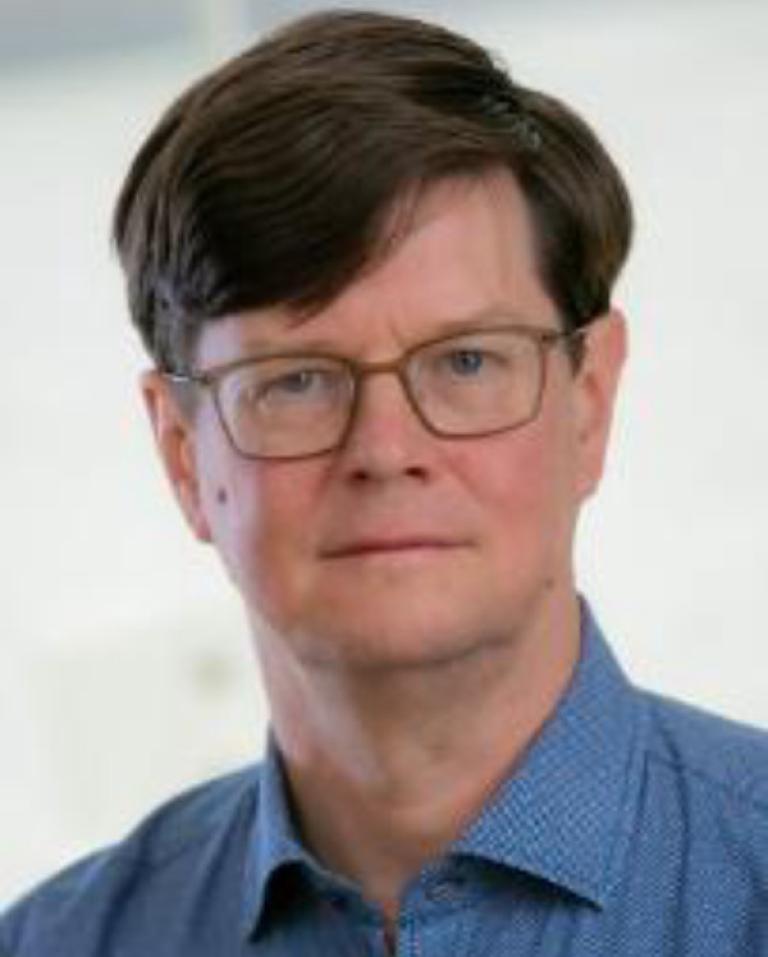
Wilfried Winiwarter
Senior Research Scholar
Pollution Management Research Group
Energy, Climate, and Environment Program
Biography
Wilfried Winiwarter is a senior research scholar in the Pollution Management Research Group of the IIASA Energy, Climate, and Environment Program. He originally trained as a chemical engineer and worked as an atmospheric scientist before joining IIASA in 2003. His interest in systems analysis derives from the overarching challenges of climate research. He acquired expertise in the biogeochemical cycle of nitrogen, especially on its anthropogenic impacts. This includes describing methods to minimize the release of ammonia or nitrous oxide into the environment, which are often connected with agricultural activities.Winiwarter started his academic career at the Vienna University of Technology, where he obtained a PhD degree and a postdoctoral qualification for academic teaching (“Habilitation”). Partly in parallel with his IIASA affiliation, he was a senior scientist at the Austrian Institute of Technology (AIT), and also held a two-year term as Professor for Systems Sciences at the University of Graz. Since October 2017, he has been working as Professor of Environmental Chemistry at the Institute of Environmental Engineering, University of Zielona Gora, Poland.
In 2019, he received the Chinese Academy of Sciences (CAS) President’s International Fellowship (PIFI) that was extended in 2021. This fellowship enabled Winiwarter to conduct research with CAS partners at the Center for Agricultural Resources Research in Shijiazhuang, China, and helped to facilitate further work with Chinese partners, formalized in projects with Peking University and Zhejiang University.
Following from his work as the director of the European Center of the International Nitrogen Initiative (2013-26), he also got involved in several assessment activities. Currently, he serves as coordinating lead author to the International Nitrogen Assessment, an initiative to compile state-of-the-art information on environmental nitrogen issues. He is also a coordinating lead author of the Austrian Assessment Report, which brings together scientific information about climate change, the climate crisis, and possible solutions from a single country perspective. Both reports are due to be published in 2025.
Last update: 07 JAN 2025
Publications
Winiwarter, W. , Amon, B., Bodirsky, B.L., Friege, H., Geupel, M., Lassaletta, L., & Raghuram, N. (2022). Focus on reactive nitrogen and the UN sustainable development goals. Environmental Research Letters 17 (5) e050401. 10.1088/1748-9326/ac6226.
Kaltenegger, K. , Winiwarter, W. , Guéret, S., & Suchowska-Kisielewicz, M. (2022). Stickstoff im urbanen Raum. In: Österreichischer Klimatag 2022, 20-22 April 2022.
Xu, R., Tian, H., Pan, N., Thompson, R.L., Canadell, J.G., Davidson, E.A., Nevison, C., Winiwarter, W. , Shi, H., Pan, S., Chang, J., Ciais, P., Dangal, S.R.S., Ito, A., Jackson, R.B., Joos, F., Lauerwald, R., Lienert, S., Maavara, T., Millet, D.B., Raymond, P.A., Regnier, P., Tubiello, F.N., Vuichard, N., Wells, K.C., Wilson, C., Yang, J., Yao, Y., Zaehle, S., & Zhou, F. (2021). Magnitude and Uncertainty of Nitrous Oxide Emissions From North America Based on Bottom‐Up and Top‐Down Approaches: Informing Future Research and National Inventories. Geophysical Research Letters 48 (23) e2021GL095264. 10.1029/2021GL095264.
Wang, H., Zhao, Z., Winiwarter, W. , Bai, Z., Wang, X., Fan, X., Zhu, Z., Hu, C., & Ma, L. (2021). Strategies to reduce ammonia emissions from livestock and their cost-benefit analysis: A case study of Sheyang county. Environmental Pollution 290 e118045. 10.1016/j.envpol.2021.118045.
Chen, Y., Zhang, L., Henze, D.K., Zhao, Y., Lu, X., Winiwarter, W. , Guo, Y., Liu, X., Wen, Z., Pan, Y., & Song, Y. (2021). Interannual variation of reactive nitrogen emissions and their impacts on PM2.5 air pollution in China during 2005–2015. Environmental Research Letters 16 (12) e125004. 10.1088/1748-9326/ac3695.