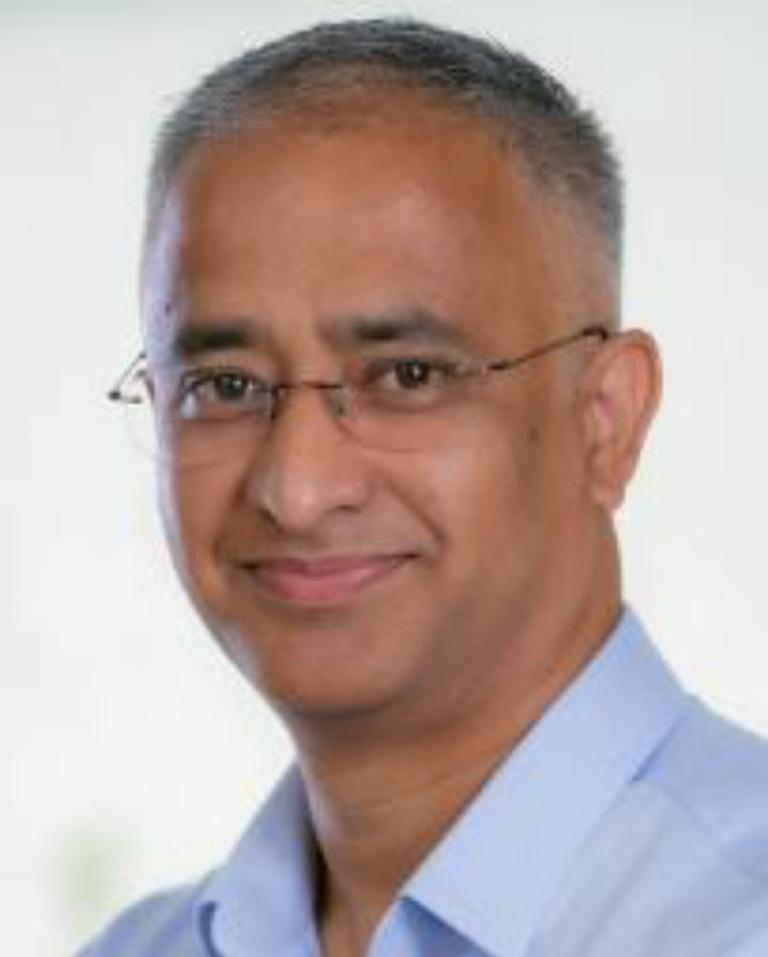
Samir K.C.
Senior Research Scholar
Multidimensional Demographic Modeling Research Group
Population and Just Societies Program
Biography
Samir KC is a senior research scholar at IIASA. He first joined the institute in 2005 and has previously led the Multidimensional Demographic Modeling research group. Currently, he is affiliated with the Population and Just Societies Program. Concurrently, Samir serves as a professor and founding member of the Asian Demographic Research Institute (ADRI) at Shanghai University, where he leads the research pillar on Human Capital Development. Recently, he initiated the Population and Statistics Research Hub in Kathmandu Valley, Nepal.In addition to his ongoing roles, he has served as a visiting professor at Kyoto University and has facilitated numerous workshops on multidimensional demography globally. His academic foundation was laid with a master's degree in statistics from Tribhuvan University, Nepal, in 1997, followed by teaching university statistics in Kathmandu and working as a biostatistician at the Nepal Health Research Council. He completed his PhD at the University of Groningen, the Netherlands, in 2009.
His research interests center on developing and applying multidimensional population models for demographic analysis and projections, focusing particularly on human capital formation in education and health, and assessing differential vulnerability to natural disasters at both national and sub-national levels. His scholarly output includes publications in prestigious journals such as Science magazine and PNAS. He has also co-edited and written multiple chapters in the book "World Population and Human Capital in the Twenty-First Century," published by Oxford University Press in 2014. In 2018, he led a significant publication in PNAS emphasizing the importance of socioeconomic and spatial heterogeneity in future population dynamics.
Last update: 25 FEB 2025
Publications
van Vuuren, D.P, Riahi, K. , Calvin, K., Dellink, R., Emmerling, J., Fujimori, S. , K.C., S., Kriegler, E., & O’Neill, B. (2017). The Shared Socio-economic Pathways: Trajectories for human development and global environmental change. Global Environmental Change 42 148-152. 10.1016/j.gloenvcha.2016.10.009.
Abel, G. , Barakat, B., KC, S., & Lutz, W. (2016). Meeting the Sustainable Development Goals leads to lower world population growth. Proceedings of the National Academy of Sciences 113 (50) 14294-14299. 10.1073/pnas.1611386113.
K.C., S., Speringer, M., Thapa, A., & Khanal, M.N. (2016). Projecting Nepal's Demographic Future- How to deal with spatial and demographic heterogeneity. IIASA Working Paper. IIASA, Laxenburg, Austria: WP-16-021
Vinokurov, E., Balás, P., Emerson, M., Havlik, P., Pereboev, V., Rovenskaya, E. , Stepanova, A., Kofner, J., & Kabat, P. (2016). Challenges and Opportunities of Economic Integration within a Wider European and Eurasian Space. Synthesis Report. In: Challenges and Opportunities of Economic Integration within a Wider European and Eurasian Space, IIASA, Laxenburg.
Loichinger, E., K.C., S., & Lutz, W. (2016). A four-dimensional population module for the analysis of future adaptive capacity in the Phang Nga province of Thailand. In: Vienna Yearbook of Population Research 2015. Eds. Muttarak, R. & Jiang, L., pp. 263-287 Vienna, Austria: Verlag der Oesterreichischen Akademie der Wissenschaften. ISBN 13: 978-3-7001-8007-4