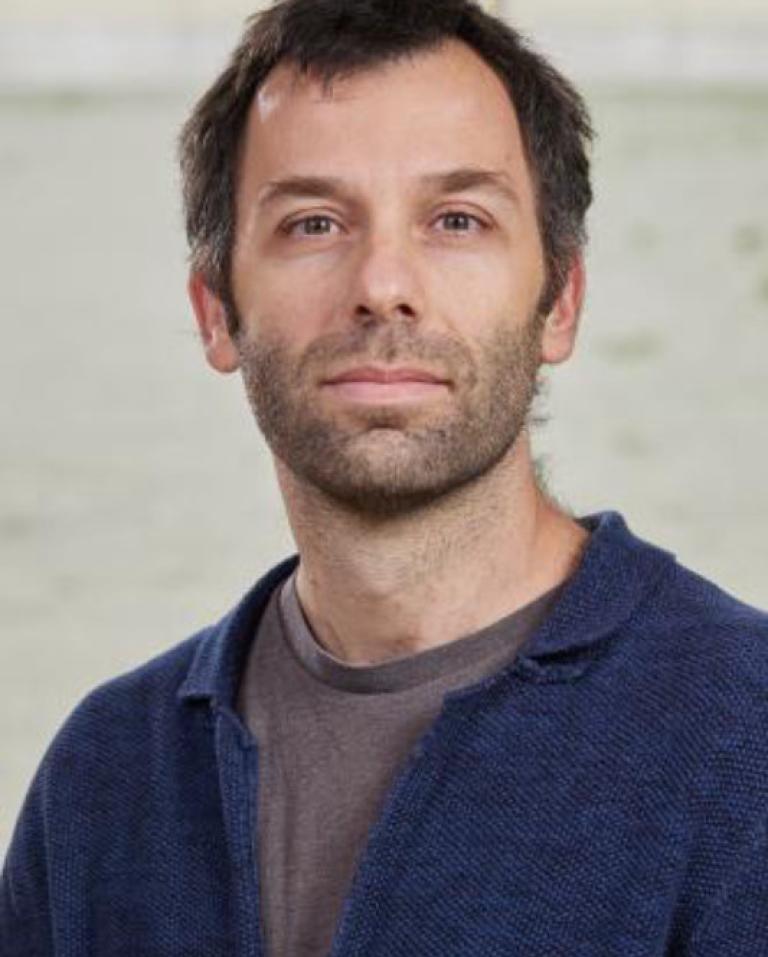
Piero Visconti
Research Group Leader and Principal Research Scholar
Biodiversity, Ecology, and Conservation Research Group
Biodiversity and Natural Resources Program
Biography
Piero Visconti leads the Biodiversity, Ecology, and Conservation (BEC) Research Group in the IIASA Biodiversity and Natural Resources Program.He holds a doctoral degree in conservation planning, jointly awarded by James Cook University, Australia, and Sapienza University of Rome, Italy. After his PhD, Visconti held postdoctoral positions at the University of Rome, the Microsoft Research Cambridge Computational Ecology Group, and the United Nations Environment Programme World Conservation Monitoring Centre (UNEP-WCMC). Prior to joining IIASA, Visconti was a joint Research Fellow at the Centre for Biodiversity and Environment Research of University College London (UCL-CBER) and the Institute of Zoology of the Zoological Society of London (ZSL-IoZ).
At IIASA, Visconti’s own research and that of the BEC group span a broad set of topics within applied ecology and conservation. BEC research combines methods from systems analysis, global change biology, conservation biogeography, spatial planning for biodiversity conservation, and restoration, to answer scientific questions and provide policy support. In particular, Visconti’s research focuses on how ecological processes and conservation objectives can be integrated into spatial planning to foster synergies between societal goals for nature and people.
Alongside his research and supervision activities, Visconti engages at the science-policy interface, for instance, through his participation in the task force on Nature Restoration for Biodiversa+ and the Monitoring and Assessment group for the European Union Biodiversity Platform. Visconti is also a Coordinating Lead Author for the methodological assessment on Spatial Planning and Connectivity of the Intergovernmental Science-Policy Platform on Biodiversity and Ecosystem Services (IPBES).
Last update: 16 SEP 2025
Publications
Lesiv, M. , Shchepashchenko, D. , Buchhorn, M., See, L. , Dürauer, M., Georgieva, I. , Jung, M. , Hofhansl, F. , Schulze, K., Bilous, A., Blyshchyk, V., Mukhortova, L., Brenes, C., Krivobokov, L., Ntie, S., Tsogt, K., Pietsch, S., Tikhonova, E., Kim, M., Di Fulvio, F. , Su, Y.-F., Zadorozhniuk, R., Sirbu, F.S., Pangin, K., Bilous, S., Kovalevskii, S.B., Kraxner, F., Rabia, A., Vasylyshyn, R., Ahmed, R., Diachuk, P., Kovalevskyi, S., Bungnamei, K., Bordoloi, K., Churilov, A., Vasylyshyn, O., Sahariah, D., Tertyshnyi, A., Saikia, A., Malek, Ž., Singha, K., Feshchenko, R., Prestele, R., ul Hassan Akhtar, I., Sharma, K., Domashovets, G., Spawn-Lee, S., Blyshchyk, O., Slyva, O., Ilkiv, M., Melnyk, O., Sliusarchuk, V., Karpuk, A., Terentiev, A., Bilous, V., Blyshchyk, K., Bilous, M., Bogovyk, N., Blyshchyk, I., Bartalev, S., Yatskov, M., Smets, B., Visconti, P. , McCallum, I. , Obersteiner, M. , & Fritz, S. (2021). Global forest management data at a 100m resolution for the year 2015. 10.5281/zenodo.4541512.
Bolam, F.C., Mair, L., Angelico, M., Brooks, T.M., Burgman, M., Hermes, C., Hoffmann, M., Martin, R.W., McGowan, P.L.K., Rodrigues, A.S.L., Rondinini, C., Westrip, J.R.S., Wheatley, H., Bedolla-Guzmán, Y., Calzada, J., Child, M.F., Cranswick, P.A., Dickman, C.R., Fessl, B., Fisher, D.O., Garnett, S.T., Groombridge, J.J., Johnson, C.N., Kennerley, R.J., King, S.R.B., Lamoreux, J.F., Lees, A.C., Lens, L., Mahood, S.P., Mallon, D.P., Meijaard, E., Méndez-Sánchez, F., Percequillo, A.R., Regan, T.J., Renjifo, L.M., Rivers, M.C., Roach, N.S., Roxburgh, L., Safford, R.J., Salaman, P., Squires, T., Vázquez-Domínguez, E., Visconti, P. , Woinarski, J.C.Z., Young, R.P., & Butchart, S.H.M. (2021). How many bird and mammal extinctions has recent conservation action prevented? Conservation Letters e12762. 10.1111/conl.12762.
Tang, D.H.Y. & Visconti, P. (2021). Biases of Odonata in Habitats Directive: Trends, trend drivers, and conservation status of European threatened Odonata. Insect Conservation and Diversity 14 (1) 1-14. 10.1111/icad.12450.
Jellesmark, S., Ausden, M., Blackburn, T.M., Gregory, R.D., Hoffmann, M., Massimino, D., McRae, L., & Visconti, P. (2021). A counterfactual approach to measure the impact of wet grassland conservation on UK breeding bird populations. Conservation Biology 35 (5) 1575-1585. 10.1111/cobi.13692.
Grantham, H. S., Duncan, A., Evans, T. D., Jones, K. R., Beyer, H. L., Schuster, R., Walston, J., Ray, J. C., Robinson, J. G., Callow, M., Clements, T., Costa, H. M., DeGemmis, A., Elsen, P. R., Ervin, J., Franco, P., Goldman, E., Goetz, S., Hansen, A., Hofsvang, E., Jantz, P., Jupiter, S., Kang, A., Langhammer, P., Laurance, W. F., Lieberman, S., Linkie, M., Malhi, Y., Maxwell, S., Mendez, M., Mittermeier, R., Murray, N. J., Possingham, H., Radachowsky, J., Saatchi, S., Samper, C., Silverman, J., Shapiro, A., Strassburg, B., Stevens, T., Stokes, E., Taylor, R., Tear, T., Tizard, R., Venter, O., Visconti, P. , Wang, S., & Watson, J. E. M. (2021). Anthropogenic modification of forests means only 40% of remaining forests have high ecosystem integrity. Nature Communications 11 (1) 10.1038/s41467-020-19493-3.