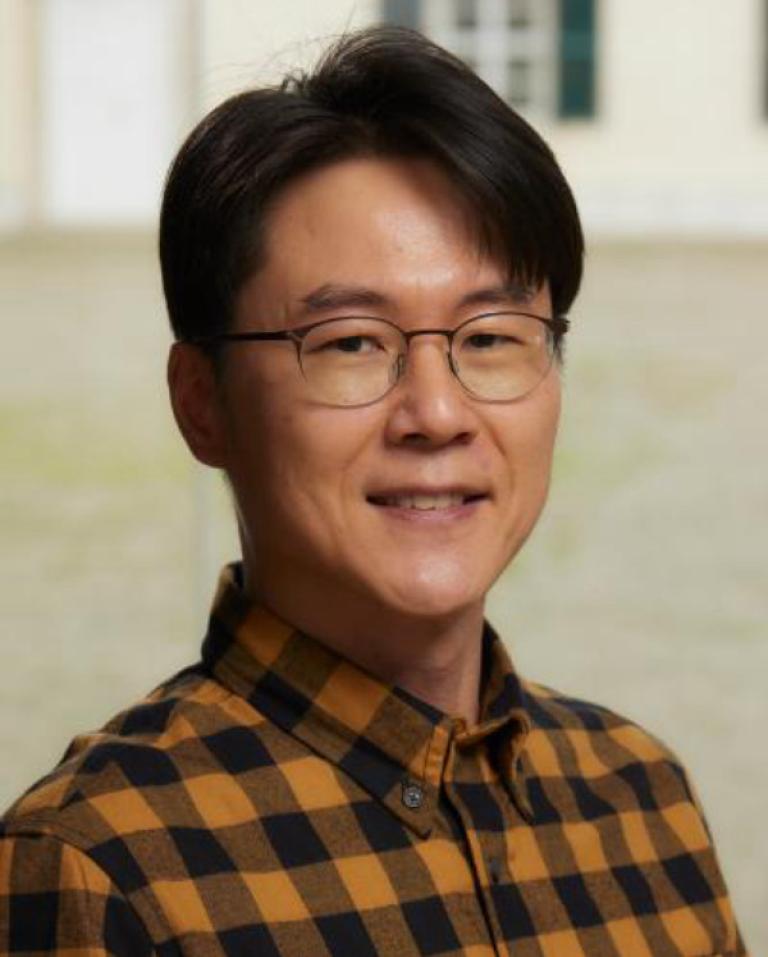
Jihoon Min
Senior Research Scholar
Transformative Institutional and Social Solutions Research Group
Energy, Climate, and Environment Program
Senior Research Scholar
Sustainable Service Systems Research Group
Energy, Climate, and Environment Program
Biography
Jihoon Min is a Senior Research Scholar jointly affiliated with the Transformative Institutional and Social Solutions (TISS) and Sustainable Service Systems (S3) research groups in the Energy, Climate, and Environment (ECE) Program. His research sits at the intersection of energy systems, human development, and climate policy, with a particular focus on what it means, materially and energetically, to ensure a decent quality of life for all people within planetary boundaries.Min's contributions center on the concept of Decent Living Standards (DLS): the material and energy prerequisites for human wellbeing. Much of his work at IIASA has investigated the implications of achieving decent living standards in developing countries for global energy and emissions pathways. Several of these contributions have been cited across multiple chapters of the Intergovernmental Panel on Climate Change (IPCC) Sixth Assessment Report (AR6), reflecting their influence on the scientific foundations of global climate and development policy. His methodological toolkit spans multi-regional input-output (MRIO) analysis, integrated assessment modeling (IAM), and quantitative inequality research. His recent work has examined income and inequality pathways consistent with poverty eradication – a paper recognized as a highlight of 2024 by Environmental Research Letters – as well as decent mobility needs frameworks, material stock requirements for decent living, and the integration of DLS targets into IAM scenarios. On the modeling side, he has contributed to the MESSAGEix-GLOBIOM integrated assessment model and had been a recurring contributor to the Network for Greening the Financial System (NGFS) climate scenario process.
He has been an invited speaker and participant at workshops spanning energy demand modeling, household behavior, needs-oriented transport, and climate scenario development, hosted by institutions across Europe, Asia, and beyond. Before joining IIASA in 2015, Min held a postdoctoral fellowship at Carnegie Mellon University's Department of Engineering and Public Policy, where he earned his doctorate investigating the behavioral dimensions of energy-efficient technology adoption. He also holds a Master of Environmental Science from Yale University, USA, and an MS in Electrical Engineering from Seoul National University, Korea. In addition, he brings prior industry experience from consumer electronics to energy efficiency consultancy sectors.
Last update: 13 MAY 2026
Publications
Vita, G., Rao, N. , Usubiaga-Liaño, A., Min, J. , & Wood, R. (2021). Durable Goods Drive Two-Thirds of Global Households’ Final Energy Footprints. Environmental Science & Technology 55 (5) 3175-3187. 10.1021/acs.est.0c03890.
Bertram, C., Hilaire, J., Kriegler, E., Beck, T., Bresch, D.N., Clarke, L., Cui, R., Edmonds, J., Min, J. , Piontek, F., Rogelj, J. , Schleussner, C.-F., van Ruijven, B. , & Yu, S. (2020). NGFS Climate Scenarios Database: Technical Documentation. Potsdam Institute for Climate Impact Research (PIK), International Institute for Applied Systems Analysis (IIASA), University of Maryland (UMD), Climate Analytics (CA), Swiss Federal Institute of Technology in Zurich (ETHZ)
van Ruijven, B. & Min, J. (2020). The MESSAGEix-GLOBIOM model and scenarios for transition risk analysis. IIASA Report. Laxenburg, Austria: IIASA
Krey, V. , Havlik, P. , Kishimoto, P. , Fricko, O. , Zilliacus, J., Gidden, M. , Strubegger, M., Kartasasmita, G., Ermolieva, T., Forsell, N., Guo, F. , Gusti, M., Huppmann, D. , Johnson, N., Kikstra, J. , Kindermann, G. , Kolp, P. , Lovat, F. , McCollum, D., Min, J. , Pachauri, S. , Parkinson, S. , Rao, S., Rogelj, J. , Ünlü, G. , Valin, H. , Wagner, P., Zakeri, B. , Obersteiner, M. , & Riahi, K. (2020). MESSAGEix-GLOBIOM Documentation - 2020 release. IIASA , Laxenburg, Austria. 10.22022/IACC/03-2021.17115.