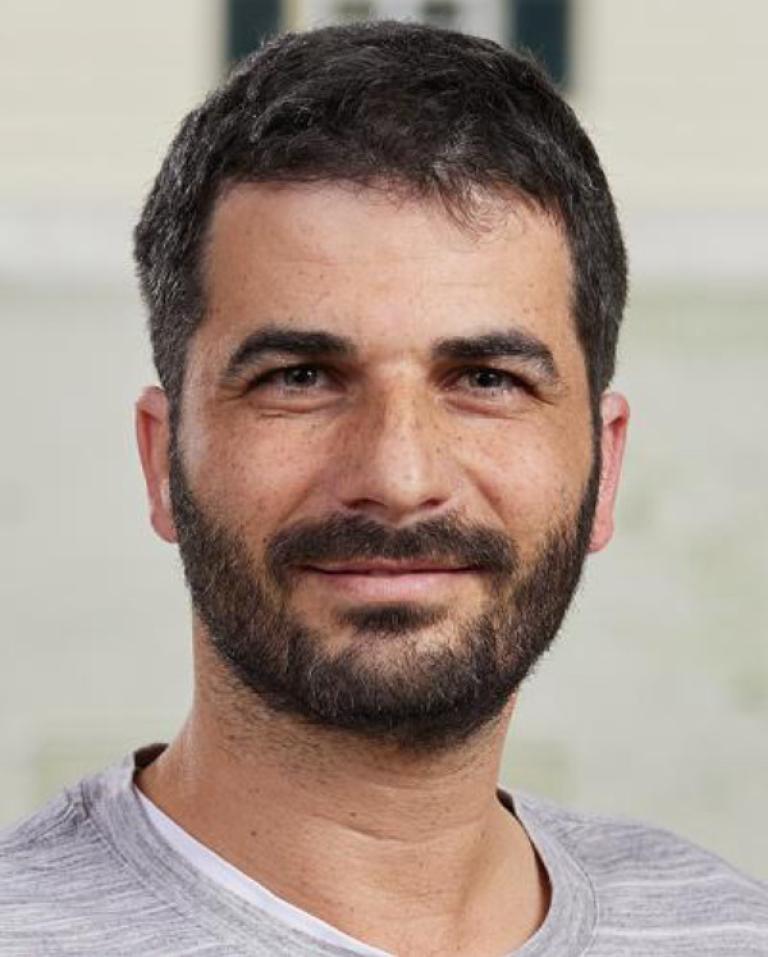
Dor Fridman
Research Scholar
Water Security Research Group
Biodiversity and Natural Resources Program
Biography
Dor Fridman is a research scholar in the Water Security Research Group of the IIASA Biodiversity and Natural Resources Program. His research focuses on modeling the human-hydrological interface. He works to include human water technologies in the Community Water Model (CWatM), including wastewater treatment and reclamation, desalination, and water distribution networks and inter-basin water transfers.As part of his work in the group, Fridman promotes the Water Futures and Solutions for Israel (WaFS-Israel) Project, using the CWatM to simulate current and future water cycles for two important Israeli river basins. The simulations explore the effects of spatial development on discharge and on the potential for runoff harvesting. His research interests cover the vast field of human-environment interactions. Specifically, he is interested in the water-energy-food nexus, the potential of reclaiming wastewater, the benefits from green infrastructure, and urban hydrology (e.g., the potential of 'Sponge Cities' to reduce water scarcity, risks for water, and risks from water).
Prior to joining IIASA, Fridman dealt extensively with interregional sustainability, the sustainability of food systems, and environmental accounting. His teaching experience includes over five years in different courses and positions. Between 2017 and 2021 he taught Geographic Information Systems (GIS) to MA students in an urban planning program at the Geography Department of the Ben-Gurion University of the Negev, Israel.
Fridman holds PhD and MA degrees from the Department of Geography and Environmental Development at the Ben-Gurion University of the Negev, Israel, and a BA degree in Geography and Economics from the same institution. He is also a Milken Institute Fellows' Program alumni (2012/3).
Last update: 20 SEP 2022
Publications
Fridman, D. , Smilovic, M. , Burek, P. , Tramberend, S. , & Kahil, T. (2025). Wastewater matters: incorporating wastewater treatment and reuse into a process-based hydrological model (CWatM v1.08). Geoscientific Model Development 18 (12) 3735-3754. 10.5194/gmd-18-3735-2025.
Jones, E.R., van Beek, R., Cárdenas Belleza, G., Burek, P. , Dugdale, S.J, Flörke, M., Fridman, D. , Gosling, S.N, Kumar, R., Mercado-Bettin, D., Müller Schmied, H., Tan, Z., Thiery, W., Tilahun, A.B, Wanders, N., & van Vliet, M.T.H (2025). A multi-model assessment of global freshwater temperature and thermoelectric power supply under climate change. Environmental Research: Water 1 (2) e025002. 10.1088/3033-4942/addffa.
Atwood, L., Vigerstøl, K., Wood, S., Karres, N., Joya Barrero, V., Lovdal, A., Fridman, D. , Kumar Sahu, R., Nkwasa, A. , Burek, P. , Catania, C., Kahil, T. , Obersteiner, M. , & Bossio, D. (2025). Archetypes for Nature-Based Adaptation: Aligning Nature-Based Solutions and Enabling Conditions to Address Water Risk in Food Producing Landscapes. The Nature Conservancy and International Institute for Applied Systems Analysis
Myburgh, S., Kosatica, E., Pfister, S., Kissinger, M., Fridman, D. , & Koellner, T. (2024). An integrated biophysical-ecological assessment of embedded virtual water flows linked to Israel's consumption of agricultural crops. Science of the Total Environment 955 e177195. 10.1016/j.scitotenv.2024.177195.