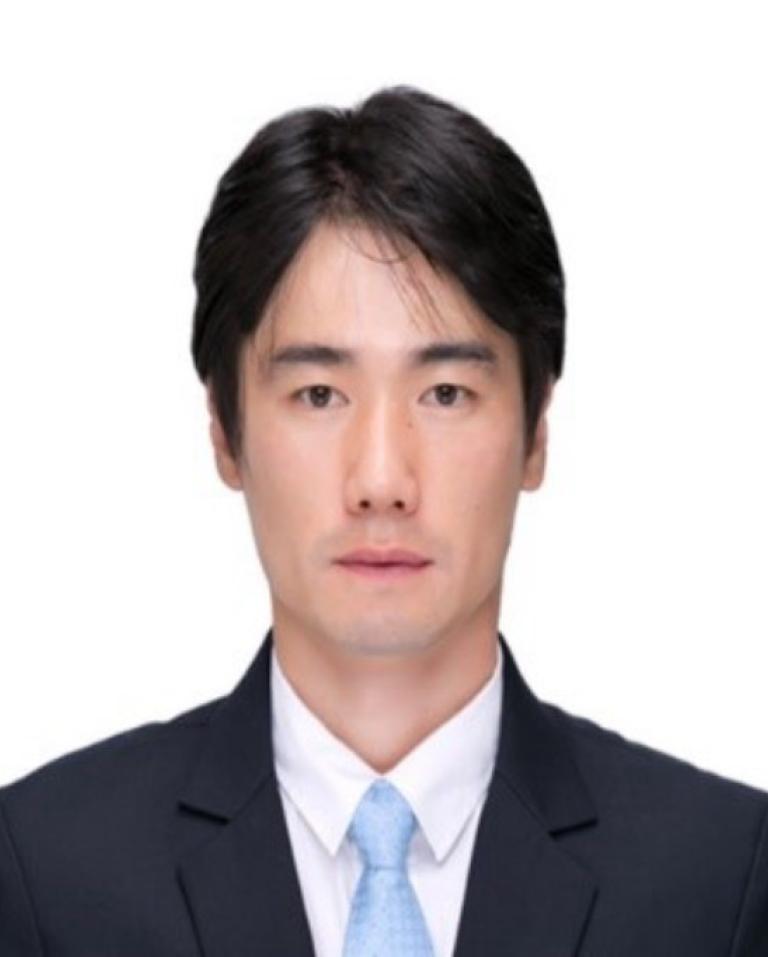
Chulwook Park
Guest Researcher
Systemic Risk and Resilience Research Group
Advancing Systems Analysis Program
Biography
Chulwook Park is a Guest Researcher in the Systemic Risk and Resilience Research Group of the IIASA Advancing Systems Analysis Program. He is also an Associate Professor in the BK21 Four at Seoul National University, Korea, where he bridges movement science with complexity analysis. He holds a PhD in Kinesiology from Seoul National University (2016), with specialized training in dynamical systems at the University of Connecticut’s Center for the Ecological Study of Perception and Action, USA (2013–2015). He was an IIASA-NRF Postdoctoral Fellow (2017–2019) focusing on network-agent dynamics and bounded rationality, and currently serves as a visiting researcher at the Complexity Science and Evolution Unit of the Okinawa Institute of Science and Technology (OIST). Building on foundations in movement science, his work extends into complex adaptive systems, systemic risk, and organizational resilience.
His research investigates how adaptive strategies and social learning produce stability across interconnected systems, with applications extending to sports science, economics, and public health. Using agent-based modeling and evolutionary game theory, he examines how bounded rational agents generate Nash equilibria via iterative adaptation. His current work at IIASA explores distinct stability patterns such as coexistence, universal failure, partial survival, and robust resilience, examining how these states transform under competition when impact-based dependencies intensify. This approach integrates insights from self-organization theory, network topology analysis, and strategic decision-making to understand systemic risk propagation and develop resilience-optimization strategies across multiple domains.
ORCID: https://orcid.org/0000-0001-8714-5760
GitHub: https://github.com/pcw8531
Last update: 19 MAY 2026