



POPJUS researchers contributed with their pioneering work on new measures of aging, healthy life expectancy, and a well-being indicator to measure the quality of life to the Fact Sheet Longevity, Health, Well-being recently published by Wittgenstein Centre.
Demographic developments in Europe today are characterized by aging populations.Fewer children are being born and at the same time people are living longer. However, this demographic change does not necessarily mean more problems. The consequences of this process depend strongly on people’s health status. According to the World Health Organization, health is central to the happiness and well-being of people and crucial for economic progress, since healthy populations live longer and are more productive. Improving the health of a population is therefore one of the most important and effective ways to cope with the challenges of aging societies.
News

24 September 2026
IIASA researcher joins Austrian Academy of Sciences working group on integrated carbon neutrality
On 15 September, Principal Research Scholar Thomas Schinko represented IIASA at a high-level event of the Commission on the De-Fossilization and Carbon Neutrality of the European Energy Systems (DEE) of the Austrian Academy of Sciences (OEAW). The meeting denoted the kick-off workshop of the newly established DEE Working Group "Transsectoral and Transcontinental Integration”.
23 September 2026
Eco-Welfare Network Conference
Julia Beier participated in the first in-person Eco-Welfare Network Conference, held in Brussels from 9-11 September at the Université Libre de Bruxelles as part of the Transform-Labor project.
14 September 2026
Can a warming climate put women at greater risk?
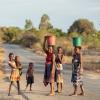
Unusually warm periods could have a link to an increased risk of intimate partner violence against women, according to a new IIASA-led study covering 31 countries in sub-Saharan Africa. The findings highlight how rising temperatures may compound existing risks of violence, with effects varying between demographic groups.