The following statistics are from the last 5 full calendar years: 2021-2025
Publications
0
Publications by IIASA researchers from Suriname
Projects
245
Projects related to Suriname
| Name | Start | End Sort ascending | Abbreviation | Classification |
|---|---|---|---|---|
| Restor: Remote Sensing for Restoration: using technology to support restoration monitoring | 2021 | 2022 | Restor | Global |
| Medium Complexity Earth System Risk Management | 2019 | 2022 | ERM | Global |
| Management for resilience of multifunctionality in European forests in the era of bioeconomy | 2019 | 2022 | MultiForest | Global |
| Non-CO2 JRC: Non-CO2 Greenhouse Gas emissions and emission reduction potentials associated | 2021 | 2022 | Non-CO2 JRC | Global |
| ENVINEQUE: An Empirical analysis environmental inequality in the EU | 2019 | 2022 | EnvINEQEU | Global |
| Water Scarcity Clock 2.0 | 2022 | 2022 | WSC 2.0 | Global |
| Systematic assessment of monitoring air pollutants not covered under Directives 2004/107/EC an 2008/50/EC | 2022 | 2022 | SR15 | Global |
| World Energy Outlook 2021- Air Pollution and Emissions Analysis & Modelling Lot 2 |
2021 | 2022 | WEO2021 - Lot 2 | Global |
| Urban nitrogen cycles: new economy thinking (UNCNET) to master the challenges of climate change | 2019 | 2022 | UNCNET | Global |
| Contribution to the ISC coordinated initiative Unleashing Science: Delivering Missions for Sustainability | 2022 | 2022 | ISC-MOSci | Global |
Pagination
0
Projects sponsored by funders from Suriname
Engagement
People
Focus
Annual Report 2023
Exploring plant-based food alternatives to advance global sustainability
Shifting diets could yield major improvements for climate and biodiversity. IIASA researchers found that replacing half of all main meat and milk products with plant-based alternatives by 2050 can reduce agriculture and land userelated greenhouse gas (GHG) emissions by 31% and halt the degradation of forests and natural land.
Annual Report 2023
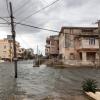
Evaluating fiscal resilience against disasters in the Caribbean
IIASA researchers used a new method to analyze the effectiveness of the Caribbean Catastrophe Risk Insurance Facility (CCRIF) with regard to its ability to minimize the short-term fiscal effects of disasters.