The following statistics are from the last 5 full calendar years: 2021-2025
Publications
1
Publications about Sudan
| Title | Type | Publisher | Date Sort ascending | Journal |
|---|---|---|---|---|
| Cooperation in a transboundary river basin: a large-scale socio-hydrological model of the Eastern Nile | article | European Geosciences Union (EGU) ; Copernicus | Hydrology and Earth System Sciences |
0
Publications by IIASA researchers from Sudan
Projects
254
Projects related to Sudan
| Name | Start | End Sort ascending | Abbreviation | Classification |
|---|---|---|---|---|
| BoE - NGFS: Modeling work to support the NGFS | 2020 | 2021 | BoE - NGFS | Global |
| Energy Demand changes Induced by Technological and Social innovations | 2020 | 2021 | EDITS | Global |
| Global Landscapes: RFS-IIASA Rapid Spatial Analysis | 2020 | 2021 | Global Landscap | Global |
| Coordinated Research in Earth Systems and Climate: Experiments, kNowledge, Dissemination and Outreach | 2015 | 2021 | CRESCENDO | Global |
| WeObserve: Coordinating citizen observatories across Europe | 2017 | 2021 | WeObserve | Global |
| Poverty, demography and hunger mapping collaboration with World Data Lab, Vienna | 2020 | 2021 | PovertyMapping3 | Global |
| Modelling Air Pollution Control and Environmental Health Perspectives under the Green and Low Carbon Transition of Global Energy System | 2021 | 2021 | MAPEHP | Global |
| Marginal lands for Growing Industrial Crops: Turning a burden into an opportunity | 2017 | 2021 | MAGIC | Global |
| Embedding climate policies into deep economic transformations | 2018 | 2021 | EconTrans | Global |
| Smart Specialisation, Sustainable Development Goals and Environmental Commons | 2020 | 2021 | S3&SDGs&ENVI | Global |
Pagination
0
Projects sponsored by funders from Sudan
Engagement
2
Number of times participants from Sudan joined IIASA events
People
2
- Women
- Men
Total number of alumni from Sudan
News
18 May 2026
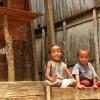
African Human Capital Data Sheet 2026
The African Human Capital Data Sheet 2026: Past Trends, Skills, and Future Pathways presents new evidence on population trends by level of education, skills, and demographic transitions across the African continent.