
Can we store carbon in our buildings while using fewer resources to build them? A new study led by IIASA researcher Alessio Mastrucci explores the potential of structural wood and biochar-based concrete to store carbon in urban buildings and reduce material-related emissions. The findings show significant potential for carbon storage, while combining material substitution with strategies to use fewer resources and keep materials in use for longer could deliver even greater climate benefits.
Buildings: Part of the problem, part of the solution?
As cities grow, so does the demand for buildings and construction materials. Producing conventional materials such as concrete and steel generates substantial greenhouse gas emissions, making the construction sector an important part of the climate challenge. At the same time, buildings can last for decades and provide opportunities to store carbon and help tackle climate change.
IIASA researcher Alessio Mastrucci and colleagues explored whether bio-based construction materials could help store and reduce these emissions. Published in Environmental Research Letters, their research examines two options: structural wood and biochar-based concrete. They modeled how these materials could influence carbon storage and greenhouse gas emissions from building material production and end-of-life treatments in urban buildings worldwide until the end of the century.
 © Iryna Kushnarova | Dreamstime
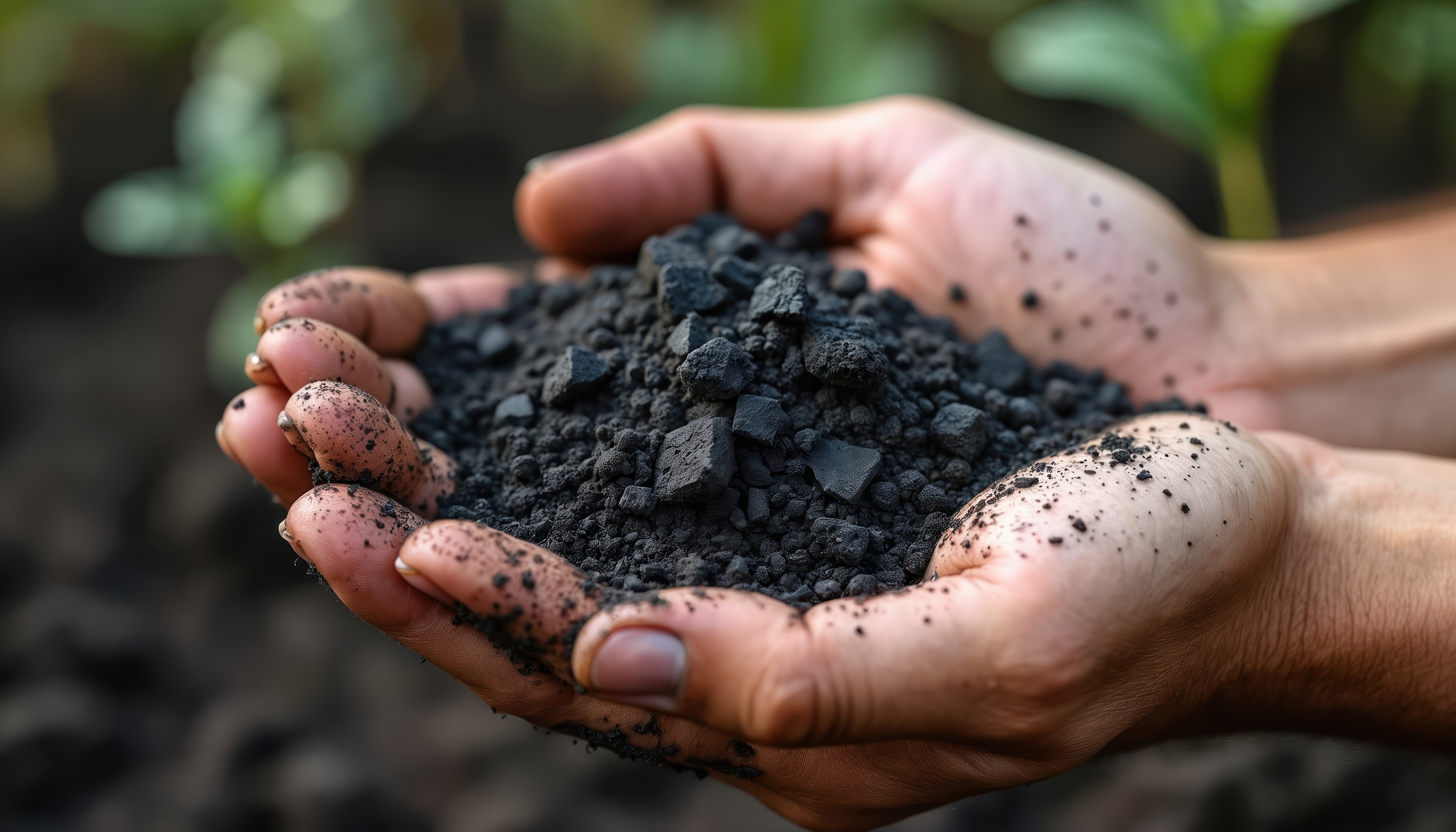
Hands holding biochar.
Storing carbon in wood and biochar
The basic idea is simple: trees absorb carbon dioxide as they grow, and some of that carbon can remain stored for decades when the resulting wood is used in buildings. Biochar, a charcoal-like material produced by heating organic materials such as wood and agricultural waste at high-temperatures in an oxygen-limited environment, can similarly lock carbon into construction materials. The climate benefits are, however, not guaranteed. Carbon can be released when materials reach the end of their service lives, and producing the materials themselves can also generate emissions. The study therefore tracks both carbon entering buildings and the carbon leaving them when they are demolished, rather than simply counting the amount of carbon stored in new construction.
How much difference can these materials make?
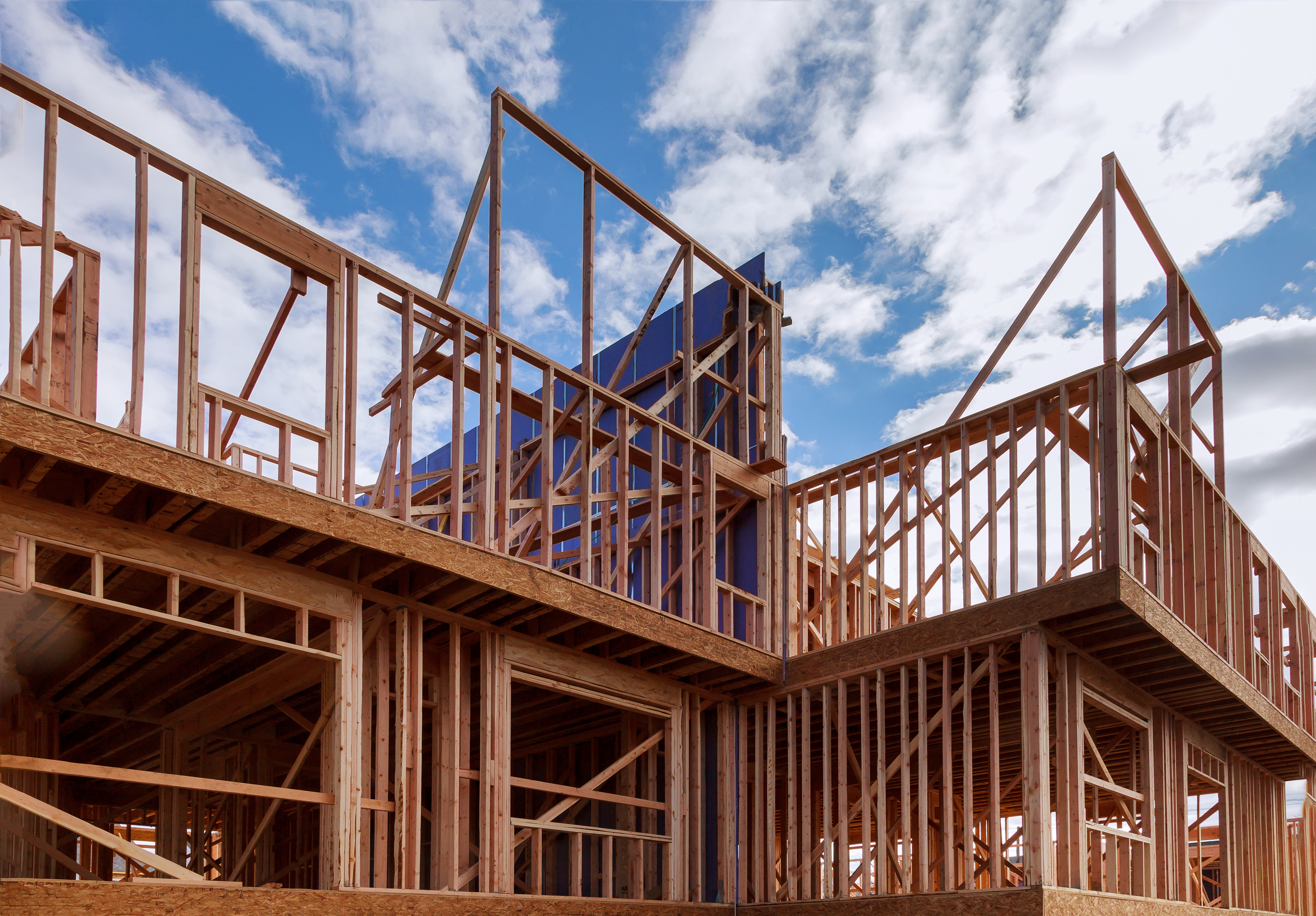
The results show a substantial difference between the two types of materials. In scenarios where structural wood replaces 10%, 30%, or 50% of conventional construction systems by 2050, cumulative net carbon storage between 2020 and 2100 reaches 11.0-24.8 gigatonnes of CO₂-equivalent, compared to 7.6 GtCO2eq in a reference scenario following current practices. In the scenarios involving biochar-based concrete replacing 10%, 30%, or 50% of conventional concrete, with biochar dosage limited to 2% to 10% to ensure structural resistance, this figure ranges from 7.9 to 14.5 gigatonnes. Replacing conventional construction with lighter wood structures can also reduce the total amount of material required for construction.
The difference becomes even clearer when we consider emissions from building material production and end-of-life treatments together with carbon storage benefits. If current construction practices continue, these emissions could total 249 gigatonnes of CO₂-equivalent between 2020 and 2100. Using wood instead of conventional building materials could cut these emissions by up to 40% in the most ambitious scenario, mainly by reducing the need for carbon intensive cement. Biochar-based concrete offers smaller reductions of around 4%, even in the most ambitious scenario, because it replaces less conventional concrete.
 © Photovs | Dreamstime
Why using less materials matters
Replacing conventional materials is only part of the solution. The study also examines ways to reduce the demand for new materials and make better use of existing ones. These include building smaller homes, extending the lifespan of buildings, designing lighter structures, and reusing and recycling more building materials.
Combining these approaches with the use of wood instead of conventional construction materials delivers the greatest emissions reductions, cutting emissions from building materials production and end-of-life treatments by up to 64% over the century.
The challenge of scaling up
The potential benefits come with important practical questions. Using biochar-based concrete on a large scale would require a dramatic increase in biochar production. The medium biochar scenario would require around 12 million tonnes per year by mid-century, roughly 34 times current production. Greater use of structural wood would also require additional wood supplies, raising potential concerns about sustainable forest management, biodiversity, and competing demands for biomass.
Carbon-storing materials therefore need to be part of a wider strategy that considers where materials come from, how much is needed, and how we can extend the life of buildings and reuse their materials. Bio-based construction can contribute to climate mitigation, but its benefits depend on how materials are sourced, used and managed across their entire life cycle.
Reference
Mastrucci, A., Steinberger-Maierhofer, D., Zhong, X., Alaux, N., Creutzig, F., Maczek, F., Quade, M., Röck, M., Sheng, D., Gidden, M.J. (2026). Carbon storage and mitigation potential of structural wood and biochar-based concrete in global urban building scenarios. Environmental Research Letters DOI: 10.1088/1748-9326/ae9f73
Note: This article gives the view of the author, and not the position of the IIASA Insights blog, nor of the International Institute for Applied Systems Analysis.