To make real-world impact, integrating a systems perspective into decision-making necessitates transcending disciplinary boundaries and forging partnerships beyond the scientific community. ASA research engages with policymakers in interactive processes of co-production of theories of change, data, interventions and insights.
Selected Research Highlights:
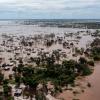
- A prominent example of ASA’s transdisciplinary research is work on heavily disputed Loss&Damage climate policy under the UNFCCC, where researchers from the SYRR research group have been engaging with policy and civil society over the years to contribute to consensual decision at COP28 to set up a Loss&Damage fund and to create the Santiago Network, a Technical Advisory Group (Mechler et al., 2023; Tavoni et al., 2024). Also, already over more than a decade ASA staff has been working with the Zurich Climate Resilience Alliance, an innovative partnership between humanitarian and development NGOs, research, and private sector partners, to identify community-based solutions for building resilience to climate hazards in a wide range of rural and urban contexts around the world (Hochrainer-Stigler et al, 2023; Mechler et al., 2018).
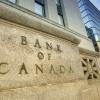
- In another example, ASA researchers collaborated closely with the Bank of Canada to enhance monetary policy through the use of an agent-based model (ABM) developed at IIASA. This collaboration enabled the Bank of Canada to make more accurate inflation projections during the COVID-19 pandemic and led to the integration of the ABM into their suit of core macroeconomic models, marking the first instance a major central bank has adopted an agent-based model to inform monetary policy (Hommes et al., 2024).
- The use of pre-developed transdisciplinary processes and tools facilitates productive group sense-making and decision-making. For example, Multi-criteria Decision-analysis (MCDA) tool, developed with contributions from the CAT research group, can help structure and rationalize decision-making in settings involving several stakeholders, each pursuing multiple objectives. This tool has been used in several case studies that informed policies mitigating the adverse COVID-19 impacts by highlighting trade-offs and identifying compromise solutions acceptable for major stakeholders' groups (Ekenberg et al., 2021, Ekenberg et al., 2022).
- Citizen science projects is another avenue of transdisciplinary research pursued within the program by the NODES research group. Citizens get involved in research through large-scale campaigns helping researchers collect and process data, enabled by specially designed web-based tools. Such projects not only address data gaps but also engage communities in the monitoring and reporting process which can lead to behavioral change. As a prominent example, these tools have been successfully applied most recently in Ghana where volunteer researchers collected data on marine litter along the coastline and contributed this knowledge to their country’s official statistics (Fraisl et al., 2024).
McQuistan, C., Mechler, R. , & Rosen Jacobson, B. (2022). Closing the gaps. A framework for understanding policies and actions to address losses and damages. Zurich Flood Resilience Alliance
Tavoni, M., Andreoni, P, Calcaterra, M., Calliari, E. , Deubelli, T. , Mechler, R. , Hochrainer-Stigler, S. , & Wenz, L. (2024). Economic quantification of Loss and Damage funding needs. Nature Reviews Earth & Environment 10.1038/s43017-024-00565-7.
Hochrainer-Stigler, S. , Mechler, R. , Deubelli, T. , Calliari, E. , & Sakic Trogrlic, R. (2024). A gap approach for preventing stress in complex systems: managing natural hazard induced fiscal risks under a changing climate. Frontiers in Sustainable Resource Management 3 10.3389/fsrma.2024.1393667.
Mechler, R. , McQuistan, C., McCallum, I. , Liu, W. , Keating, A., Magnuszewski, P., Schinko, T. , Laurien, F. , & Hochrainer-Stigler, S. (2018). Supporting Climate Risk Management at Scale. Insights from the Zurich Flood Resilience Alliance Partnership Model Applied in Peru & Nepal. In: Loss and Damage from Climate Change. Eds. Mechler, R. , Bouwer, L., Schinko, T. , Surminski, S., & Linnerooth-Bayer, J., pp. 393-424 Cham, Switzerland: Springer. ISBN 978-3-319-72025-8 10.1007/978-3-319-72026-5_17.
Hommes, C., He, M., Poledna, S., Siqueira, M., & Zhang, Y. (2024). CANVAS: A Canadian behavioral agent-based model for monetary policy. Journal of Economic Dynamics and Control 172 e104986. 10.1016/j.jedc.2024.104986.
Ekenberg, L. , Mihai, A., Fasth, T., Komendantova, N. , & Danielson, M. (2021). A Multi-Criteria Framework for Pandemic Response Measures. Frontiers in Public Health 9 e583706. 10.3389/fpubh.2021.583706.
Ekenberg, L., Fasth, T., Koulolias, V., Larsson, A., Larsson, A., Danielson, M., Komendantova, N. , & Mihai, A. (2022). A Framework for COVID-19 Pandemic Intervention Modelling and Analysis for Policy Formation Support in Botswana. The International Journal on Advances in ICT for Emerging Regions 15 (3)
Calliari, E. & Ryder, B. (2023). What Does Loss and Damage Mean at the Country Level? A Global Mapping Through Nationally Determined Contributions. Global Environmental Politics 23 (3) 71-94. 10.1162/glep_a_00725.
Hochrainer-Stigler, S. , Deubelli, T. , Parviainen, J., Cumiskey, L., Schweizer, P.-J., & Dieckmann, U. (2024). Managing systemic risk through transformative change: Combining systemic risk analysis with knowledge co-production. One Earth 7 (5) 771-781. 10.1016/j.oneear.2024.04.014.