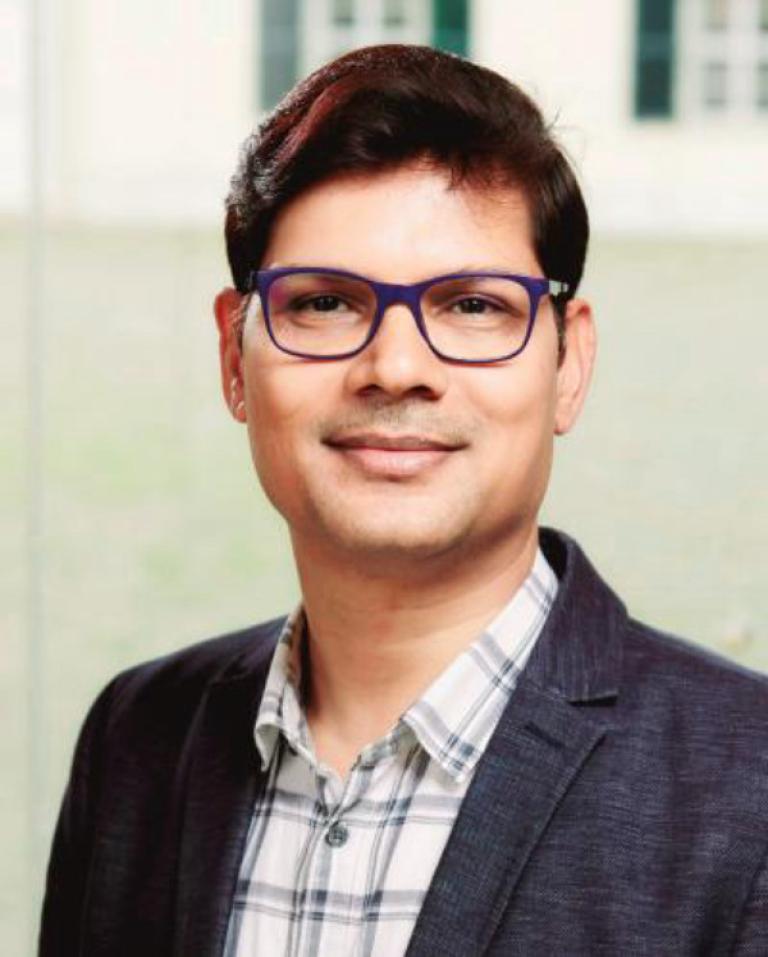
Pallav Purohit
Senior Research Scholar
Pollution Management Research Group
Energy, Climate, and Environment Program
Biography
Pallav Purohit is a senior research scholar in the Pollution Management Research Group of the IIASA Energy, Climate, and Environment Program. He developed and implemented the global fluorinated greenhouse gas module in the IIASA Greenhouse Gas and Air Pollution Interactions and Synergies (GAINS) model and coordinated various policy applications involving the GAINS model in industrialized and developing countries. His research interests include integrated assessment of air pollution and greenhouse gases, short-lived climate pollutants, energy economics, policy, and planning.Before joining IIASA in 2007, Purohit worked as an e8 Postdoctoral Research Fellow at the Research Program on International Climate Policy at the Hamburg Institute of International Economics (HWWI) in Germany. The focus of his research at HWWI was on the detailed technical evaluation of renewable energy options towards a more policy-oriented analysis of the chances and risks of such technologies under the Clean Development Mechanism of the Kyoto Protocol.
Purohit was also a visiting faculty member at the Institute of Political Science at the University of Zurich, Switzerland; the Department of Built Environment and Energy Technology at Linnaeus University, Sweden; and a visiting fellow at the School of International Development of the University of East Anglia, UK; Center for Energy and Environmental Policy Research at the Beijing Institute of Technology (BIT), China; the Council on Energy, Environment, and Water (CEEW); and the Indian Institute of Sustainable Development (IISD) in India.
Purohit is a member of the Refrigeration, Air-Conditioning, and Heat Pumps Technical Options Committee (RTOC) under the Technology and Economic Assessment Panel (TEAP) of the Ozone Secretariat, UNEP. He actively contributes to the panel’s Life-cycle Refrigerant Management (LRM) and Replenishment Task Force (RTF). In addition, he serves as an Associate Editor for Environmental Challenges and the International Journal of Global Energy Issues, and sits on the editorial advisory boards of several journals, including Communications, Earth and Environment, Discover Sustainability, and Sustainability. He has contributed to several policy reports of the European Commission, the REN21 Global Status Reports, UNEP, the World Bank, the Intergovernmental Panel on Climate Change (IPCC) Special Report on Global Warming of 1.5°C (SR1.5), and the Working Group I contribution to the IPCC Sixth Assessment Report (AR6).
Purohit received his MSc in Physics from the H.N.B. Garhwal University, India, in 1998 and his PhD in Energy Policy and Planning from the Indian Institute of Technology (IIT), Delhi, in 2005. Between 1999 and 2005, he worked at several institutions in India with a particular focus on energy, economic, and environmental interactions. In 2005, he received a two-year e8 Postdoctoral Research Fellowship on Sustainable Energy Development from the Global Sustainable Electricity Partnership (formerly known as the e7 network).
Last update: 24 APR 2026
Publications
DoEFCC & World Bank (2025). Uttar Pradesh Clean Air Plan: Airshed based air quality analysis and recommendations. Department of Environment, Forest, and Climate Change (DoEFCC), Government of Uttar Pradesh, India and the World Bank , Washington, D.C..
IEA (2025). World Energy Outlook 2025. International Energy Agency (IEA) , Paris, France.
Purohit, P. , Chao, T., Cooke, R., Dhont, H., Kaur, R., Peixoto, R., Walter-Terrinoni, H., & Woodcock, A. (2024). The Importance of Lifecycle Refrigerant Management in Climate and Ozone Protection. Sustainability 17 (1) e53. 10.3390/su17010053.
Purohit, P. , Kiesewetter, G. , Schöpp, W. , Wagner, F. , Klimont, Z. , Heyes, C. , Gomez Sanabria, A. , Srivastava, P., Borken-Kleefeld, J. , & Amann, M. (2024). Cost-effective control of air pollution in South Asia: modeling and policy applications. Environmental Research Communications 6 (12) e125017. 10.1088/2515-7620/ad9b74.
Vojta, M., Plach, A., Annadate, S., Park, S., Lee, G., Purohit, P. , Lindl, F. , Lan, X., Mühle, J., Thompson, R.L., & Stohl, A. (2024). A global re-analysis of regionally resolved emissions and atmospheric mole fractions of SF6 for the period 2005–2021. Atmospheric Chemistry and Physics 24 (21) 12465-12493. 10.5194/acp-24-12465-2024.